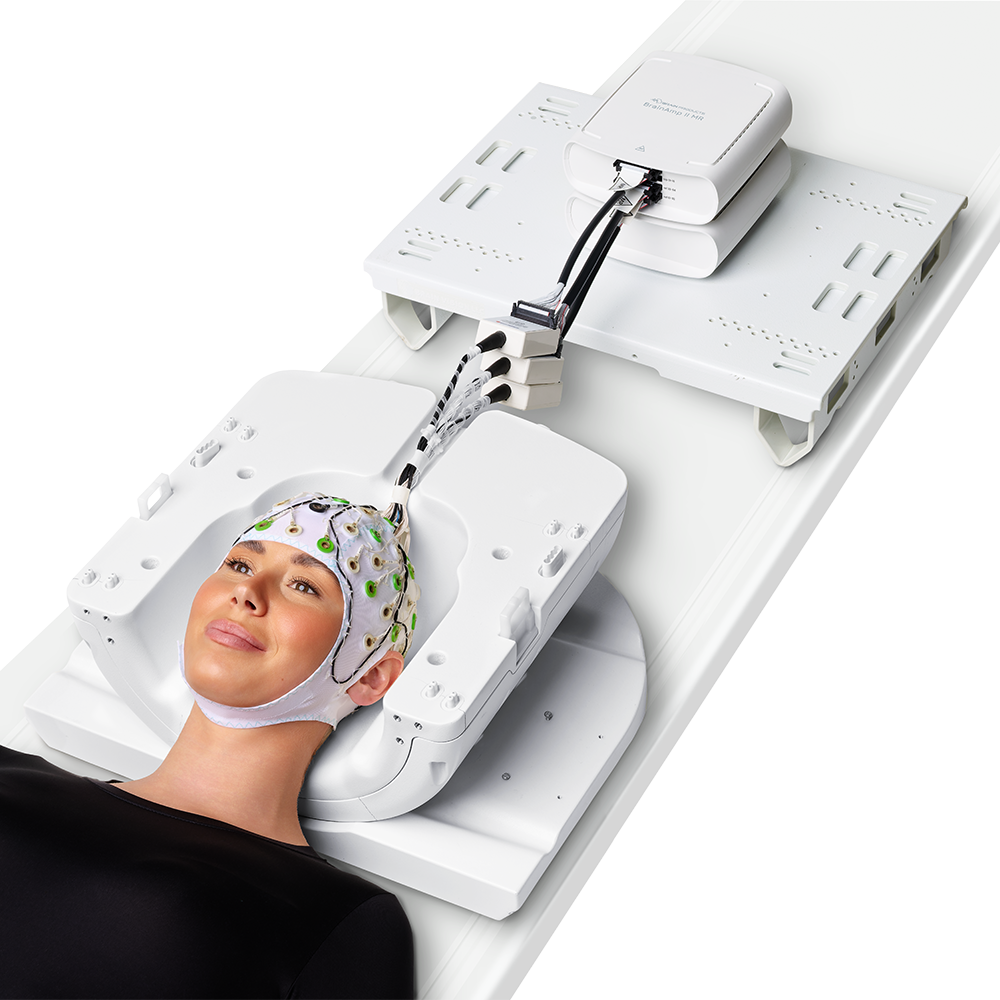
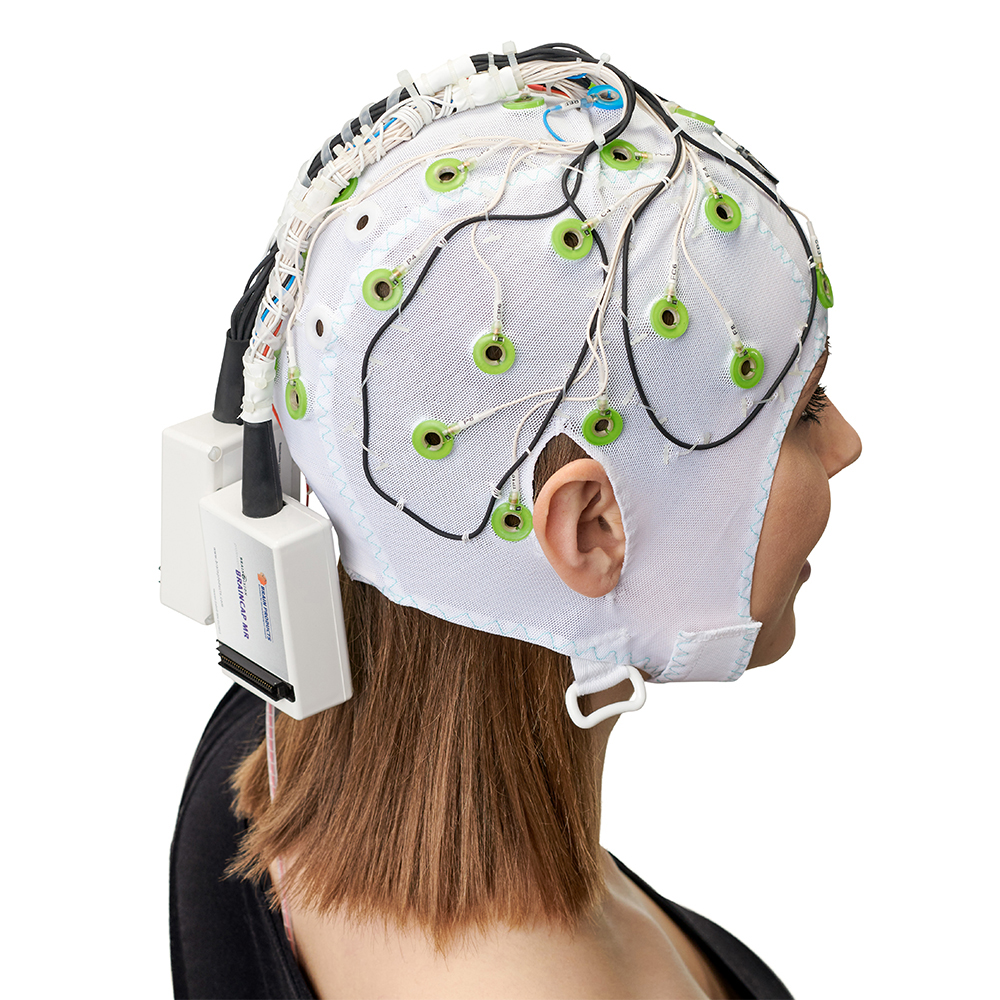
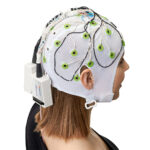
The technique of combined EEG-fMRI recordings has continued to evolve and so has the BrainCap MR with its latest version the BrainCap MR3, a passive gel-based electrode cap!
Released in 2020 (Press Release), the BrainCap MR3 combines the latest learnings of the Brain Products EEG-fMRI Specialists to include:
- shortened electrode tail (31cm from head to end of BrainCap box vs 61cm in previous versions)
- specially placed current limiting resistors
- use with 10cm rolled ribbon cables to connect to the recording amplifier
- embedded Artifact Detection Loops (ADLs)
Formerly named Carbon Wire Loops (CWLs), the ADLs are carbon wire arranged in loops embedded in different parts of the cap. They are used for measuring ballistocardiogram artifact and head movement noise during EEG-fMRI recordings. Using new regression methods, the signal from the signal from ADLs can be used to correct both noises from EEG-fMRI data offline in BrainVision Analyzer 2 and online in BrainVision Composer (coming in 2027).
When using the new BrainCap MR3 or R-Net MR, you can follow the updated EEG-fMRI safety guidelines from Brain Products. These safety recommendations continue to be updated as the field evolves, so we recommend staying subscribed to the Brain Products newsletter to hear regular updates in this field. From time to time, Brain Products shares updates like this one in 2026: Review of Current EEG-fMRI Safety and Best Practices.
If you prefer using passive saline-sponge based recording nets, then check out the R-Net MR which comes with saline-sponge electrodes for fast application, even in high density recordings.