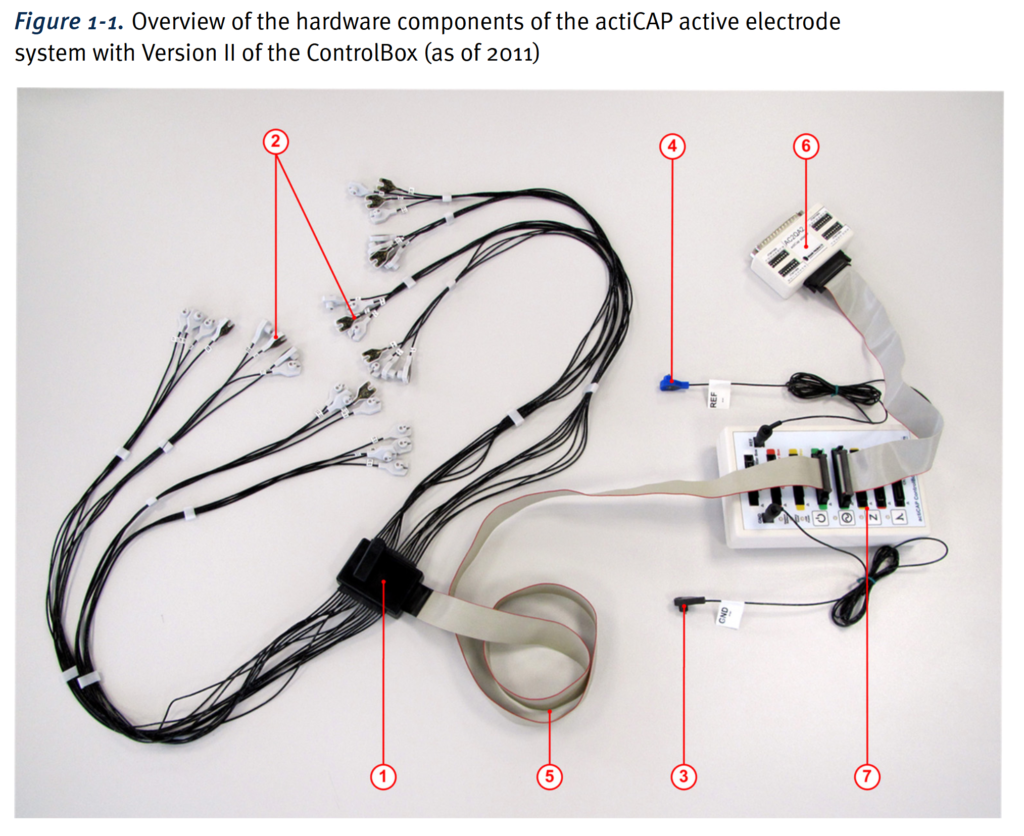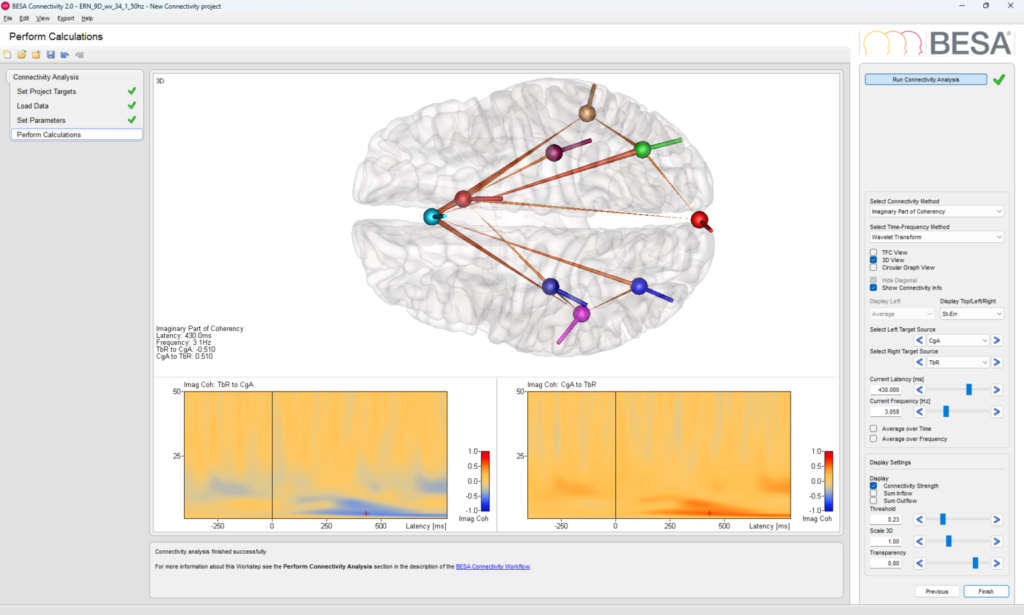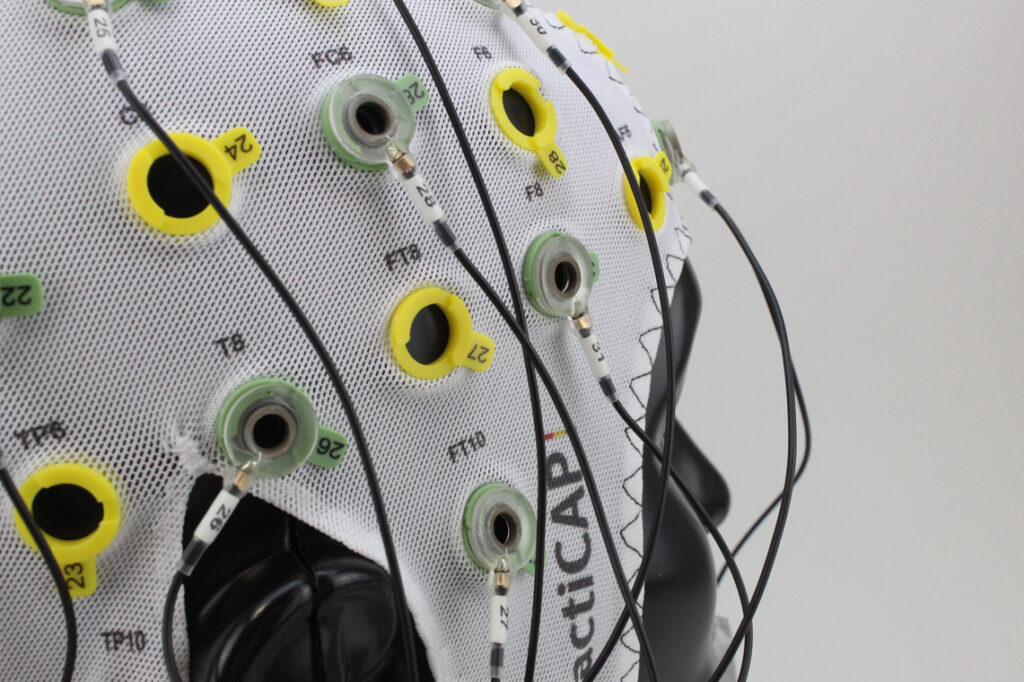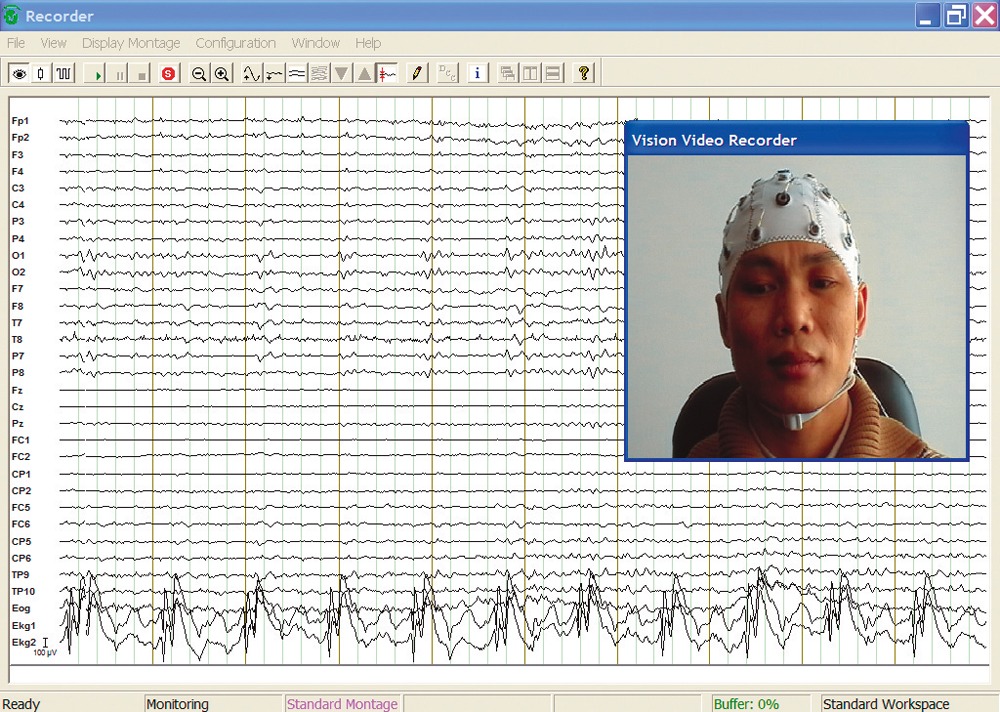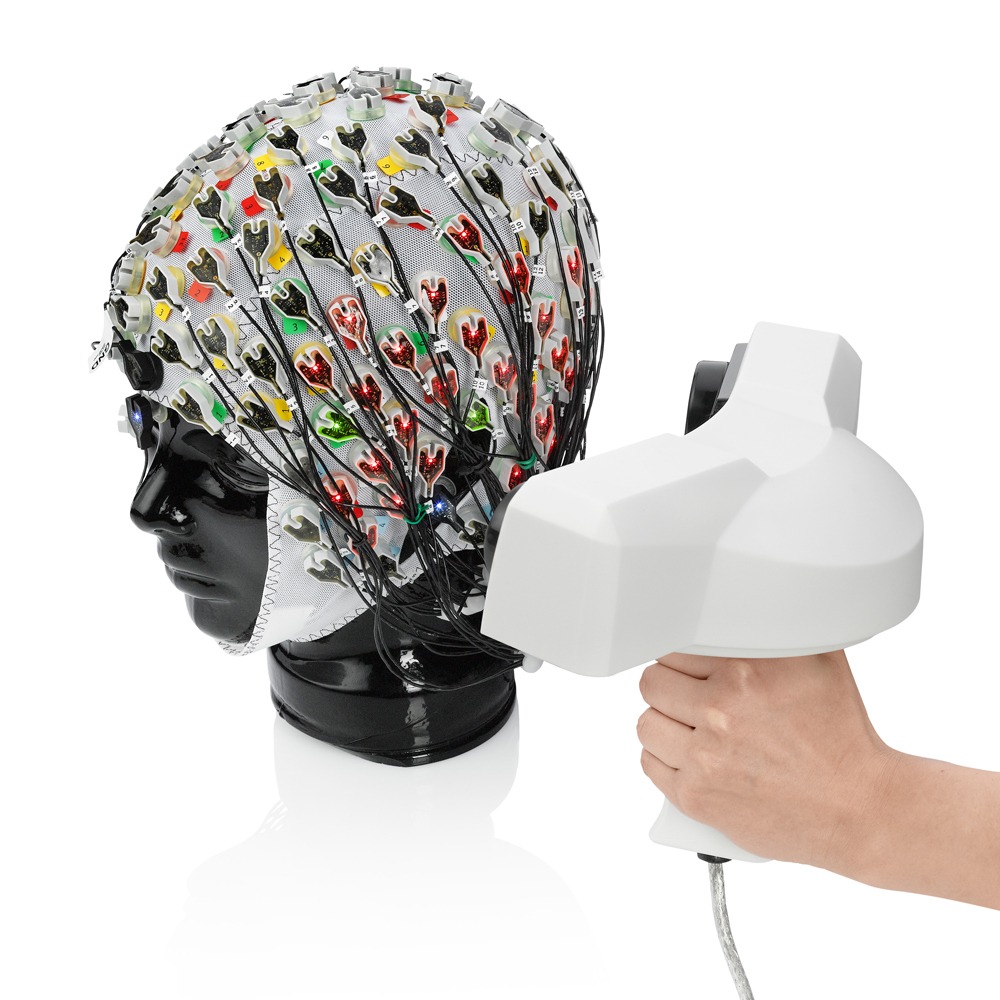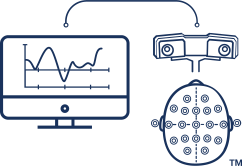
One inherent limitation of EEG & ERP data collection is that it is virtually impossible to pinpoint the underlying neural generator (e.g., source) of the electrical signal recorded from the surface of the scalp due to the folding of the cerebral cortex, which may affect the orientation of the postsynaptic potentials that are measured by the EEG electrodes. This is well-known in the EEG literature as the inverse problem. Source analysis solutions attempt to address the inverse problem by disentangling the neuronal sources that contribute to the EEG signal and helping researchers determine where and when the generator was active. Often this is done by sampling enough positions (e.g., 64 EEG channels), measuring and digitizing the locations of the EEG electrodes on the head, overlaying the electrode positions with an structural MRI (e.g., either one specific to the participant or a standardized head model), and then back-projecting the recorded electrical signals onto cortical and subcortical structures with the help of sophisticated software programs. With this approach, information pathways in the brain can be studied by using either the reconstructed activation waveforms or time-frequency analysis. Source analysis can identify the brain regions involved in different tasks and, depending on data and model quality, yield a precise localization of the generators in both space and time.