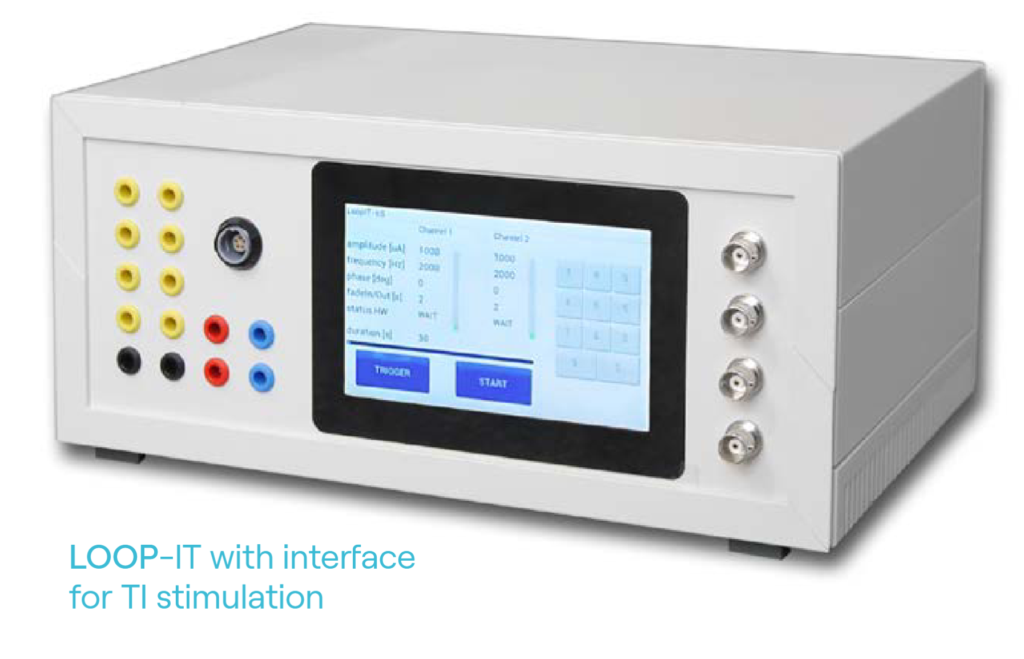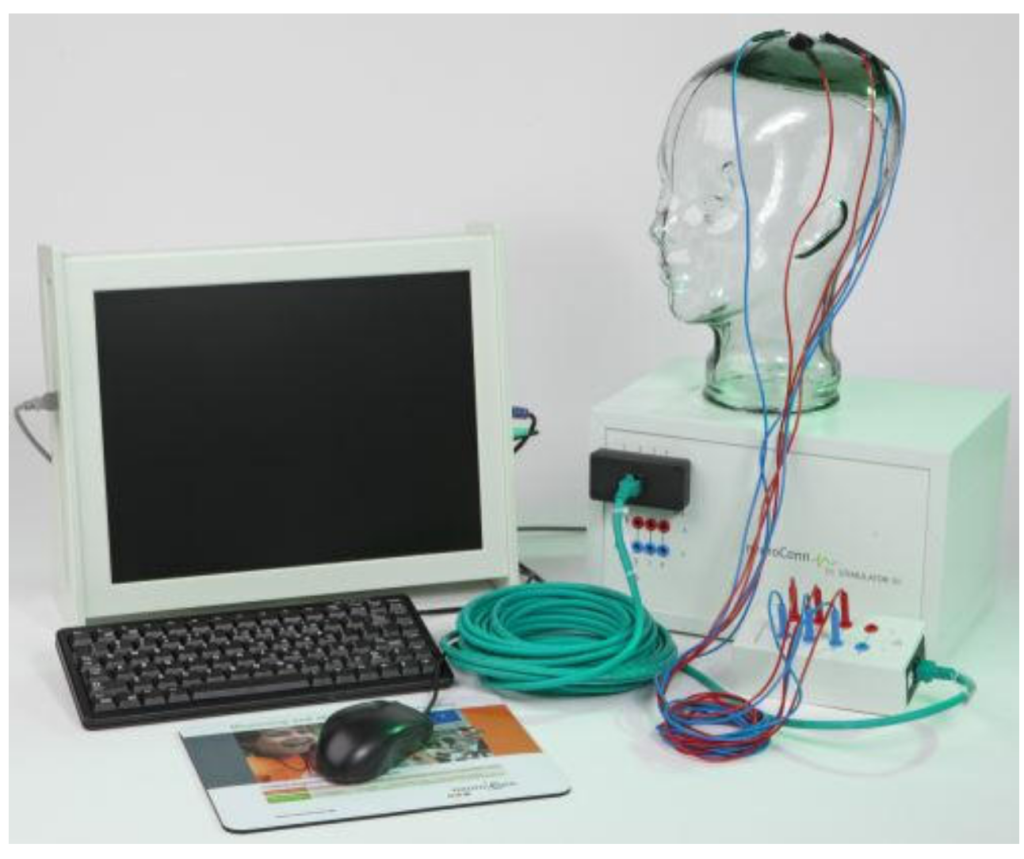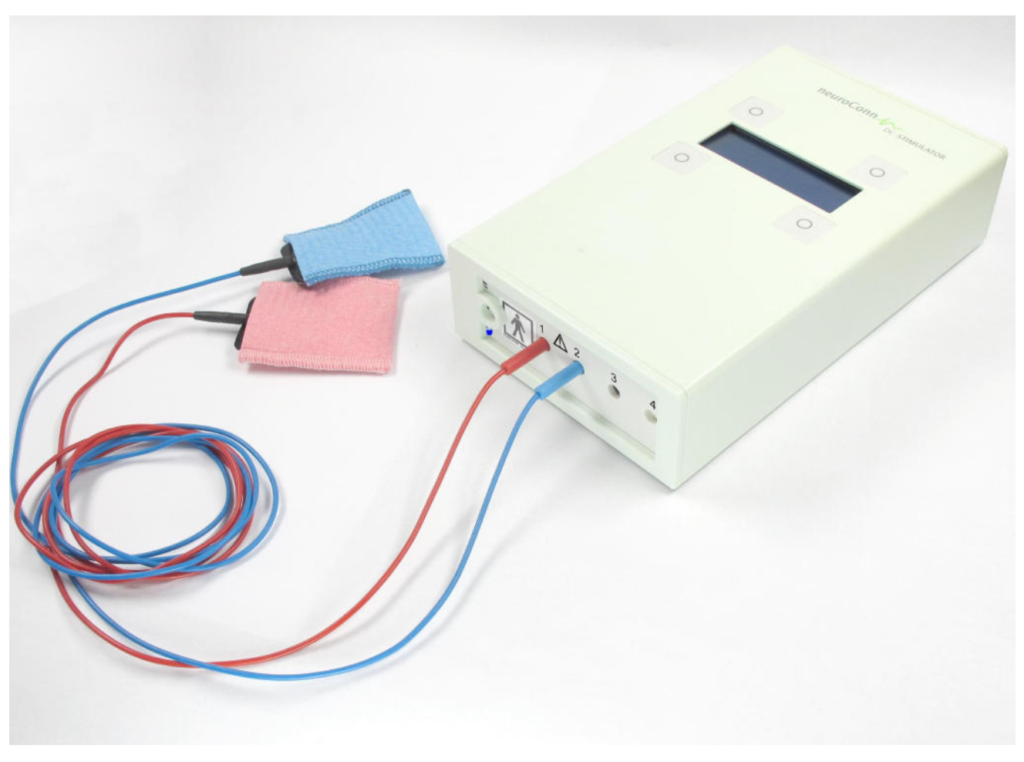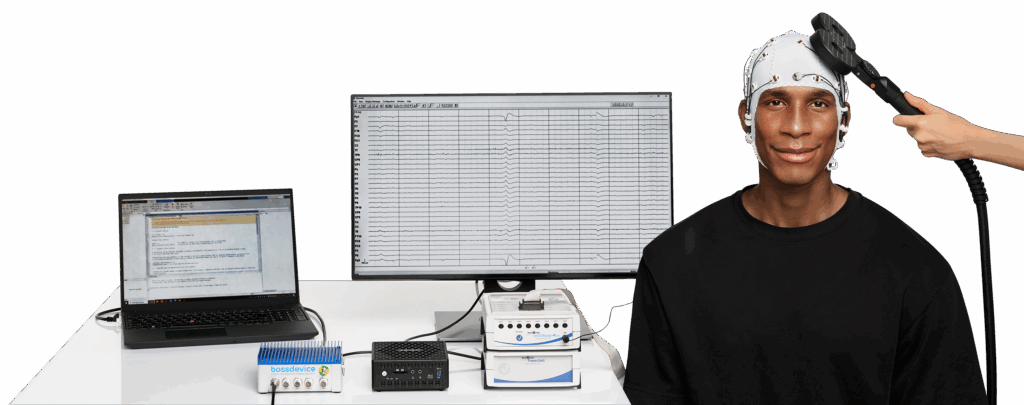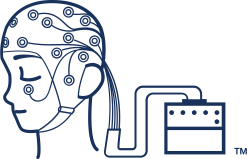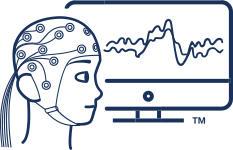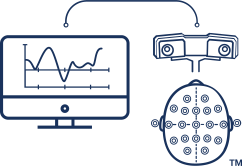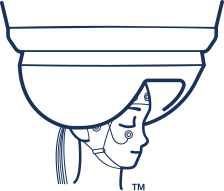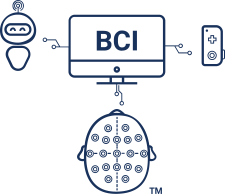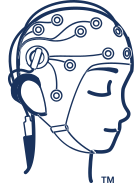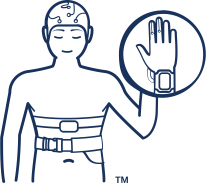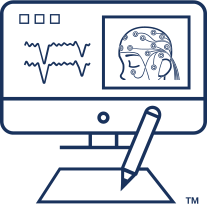
Transcranial Electrical Stimulation (tES) is a general term used to describe noninvasive brain stimulation methods in which brief pulses of low-intensity electrical current are delivered to the brain through electrodes placed on the scalp. tES may consist of direct current stimulation (tDCS), alternating current stimulation (tACS), or random noise stimulation (tRNS). Depending on the type of stimulation, the stimulation site(s), and the stimulation protocol, tES may excite or inhibit certain brain pathways and induce short-duration neuromodulation or longer-duration neuroplasticity. tES has been used to treat neuropsychiatric disorders and for neurocognitive rehabilitation following traumatic brain injury. We offer a range of cutting-edge solutions for researchers who are interested in pushing the limits of tES (including an MR-conditional setup). Recording electroencephalography (EEG) during tES (i.e., concurrent tES-EEG) is technically challenging and will result in noise in the EEG signal, especially from the EEG electrodes close to the stimulation site. These EEG artifacts can be attenuated during tDCS, but they are harder to remove during tACS or tRNS protocols. We offer an amplifier that is built to address this issue in the not-too-distant future. We also offer a complete solution for researchers who would like to combine tES with EEG for brain-state dependent experiments to precisely trigger stimulation at specific phases of ongoing brain rhythms.