Trademarked Brain Vision blue icon representing Brain Vision Education

Education

Many researchers have teaching commitments, and we recognize the time and effort that goes into lesson planning with the goal of transferring knowledge about complex topics like electrophysiology and brain activity to a room full of students. Theoretical instruction is most effective when it is followed by practical sessions that reinforce the topics covered. Although there are several voltage / current simulators and sandbox programs available online, nothing compares to the real deal. For researchers who teach general neuroscience or cognitive science courses, being able to provide students with the opportunity to gain first-hand experience with psychophysiological data collection in the classroom setting makes the course more exciting and can improve foundational learning. Traditionally, in a classroom setting, researchers may choose to borrow equipment from their laboratory, which means that regular lab downtime is necessary if dedicated training is to be provided on an ongoing basis. To encourage education and limit downtime in the lab, we offer affordable training amplifiers and teaching licenses for many of our professional software packages. Teaching EEG has never been easier!
Education Related Products

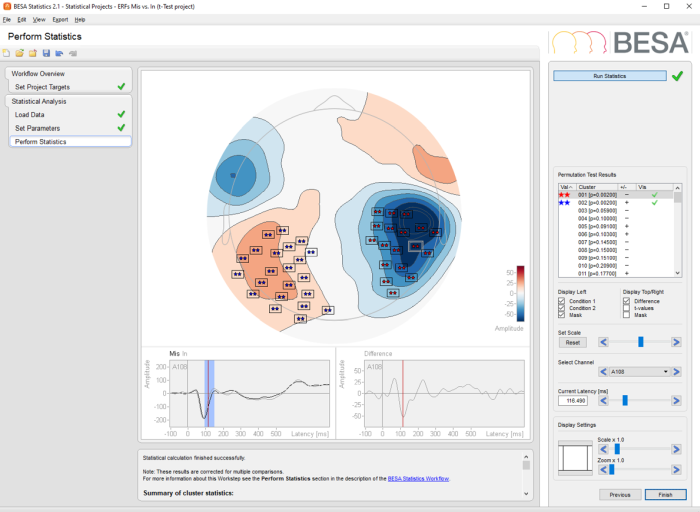
Screenshot of an analysis in BESA Statistics. See the time course of selected EEG channels as well as significant clusters of channels after a t-test.
Run complex statistical analyses on your processed EEG/MEG data with BESA Statistics workflow based GUI.

BESA Statistics 2.1

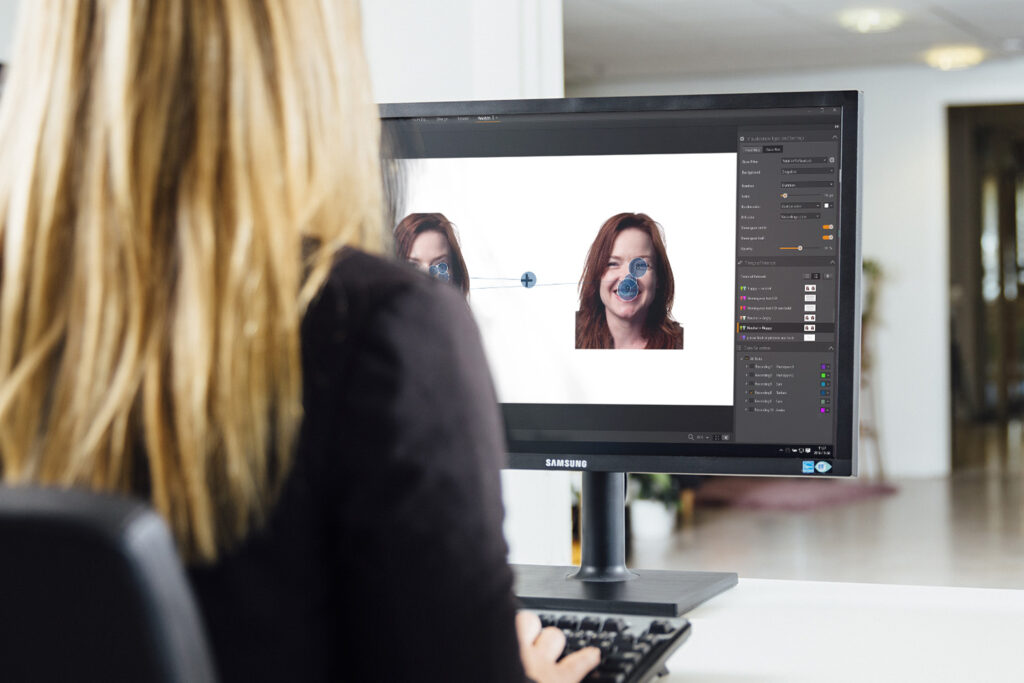
A researcher with long blond hair sits in front of a computer that is running Tobii Pro Lab software. On the software, they are reviewing the eye tracking data from someone doing a task that showed different faces. The software interface buttons and gaze position can be seen on screen.
Use Tobii Pro Lab to control your Tobii Pro mobile or stationary eyetrackers and then analyze the gaze, microsacces, or pupilometry afterward.

Tobii Pro Lab

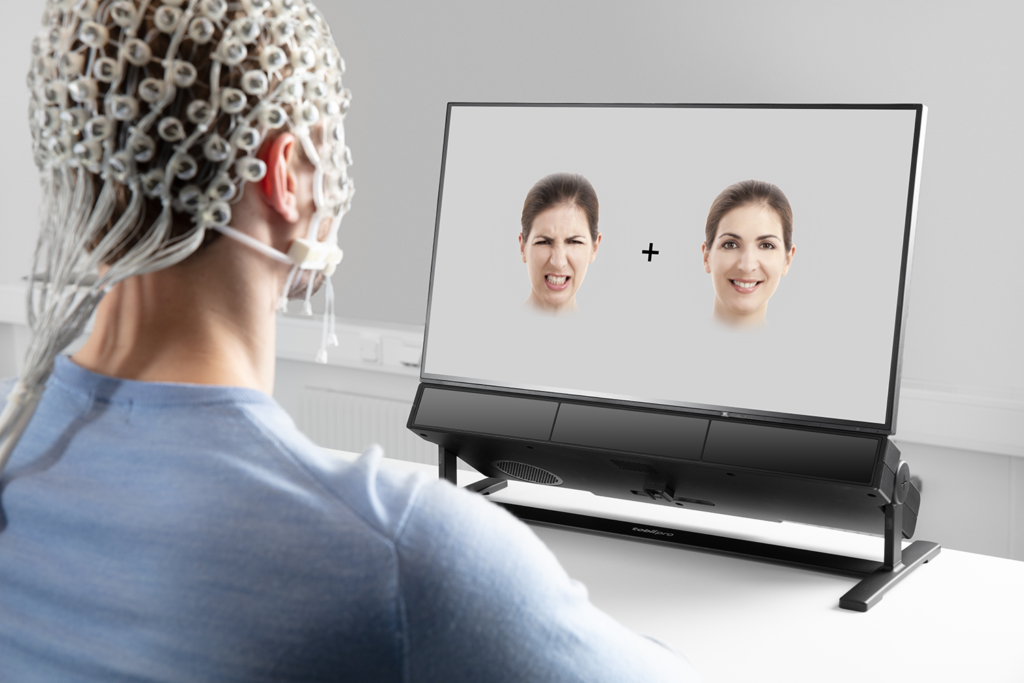
We are looking over the shoulder of a person in a blue shirt while they wear an R-Net (saline-sponge EEG net) and sit in front of the Tobii Pro Spectrum stationary eyetracking unit. On screen two faces with different emotions are visible and the eye tracker is monitoring where the person's gaze attendes on screen.
Use the Tobii Pro Spectrum to achieve high-precision, stationary eyetracking. Capable of running at up to 1200Hz (fast enough for tracking microsaccades) and with 0.17° of accuracy, the Tobii Pro Spectrum can take your eyetracking studies to the next level.

Tobii Pro Spectrum

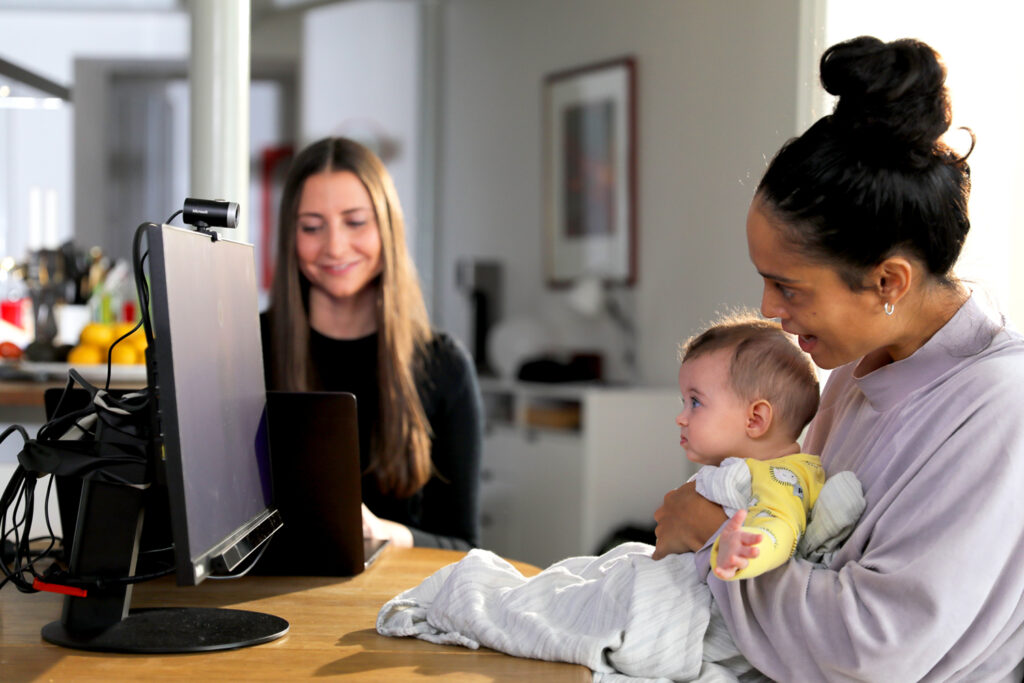
A caregiver holds a baby in their lap while they both fact a computer screen that is fitted with an eyetracker (Tobii Pro Fusion) and scene camera. A researcher is visible in the background using a different computer that will control the images shown on screen to the baby and caregiver.
The Tobii Pro Fusion is a light-weight, portable bar that can be mounted below any screen to turn it into a stationary eyetracking system.

Tobii Pro Fusion

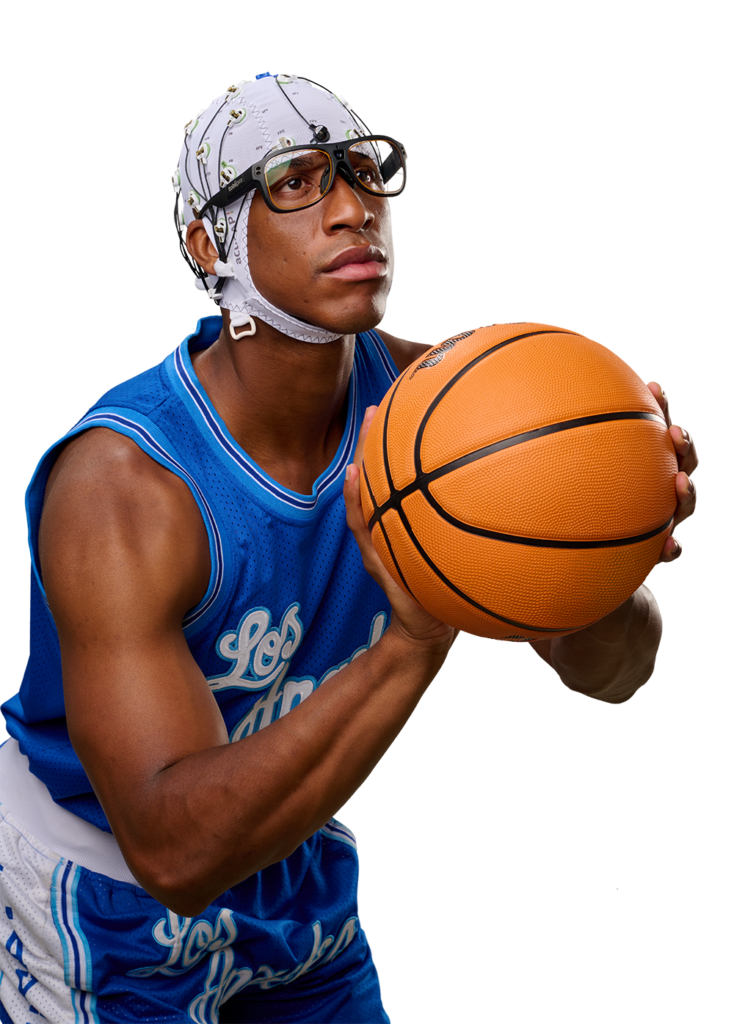
A basketball player in a blue uniform sets up to shoot the ball while wearing an EEG cap and electrodes and the Tobii Pro Glasses for wearable eyetracking.
The Tobii Pro Glasses 3 is a wearable eye tracker designed for real-world research.   You can combine its binocular eye tracking (0.6° accuracy, 50 or 100Hz) and built-in scene camera and microphone to capture precise, real-time eye tracking data while studying behavior outside the lab.

Tobii Pro Glasses

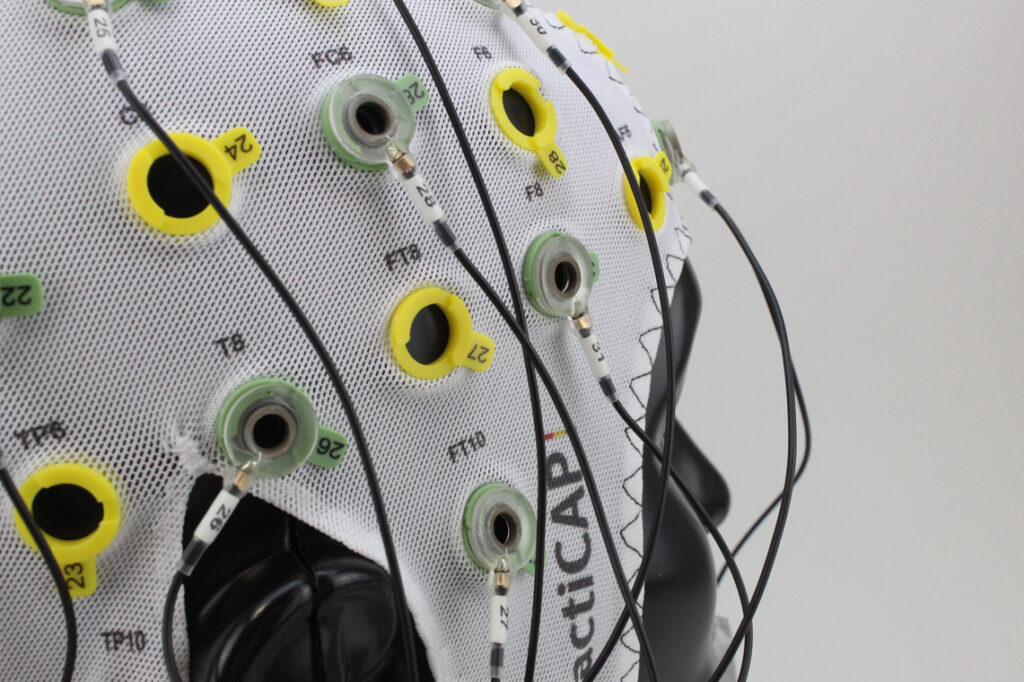
Here we have a set of B18A snaptrode electrodes fitted into the green actiCAP snap holders of an actiCAP snap cap. The picture is taken from the side of the head showing a part of the mannequin's ear and face. The actiCAP snap logo is visibly printed on the cap fabric.
Pair your existing actiCAP Snap Caps with the new B18A Snaptrode passive electrodes for passive recordings when needed!

Snaptrode (B18A) Bundles

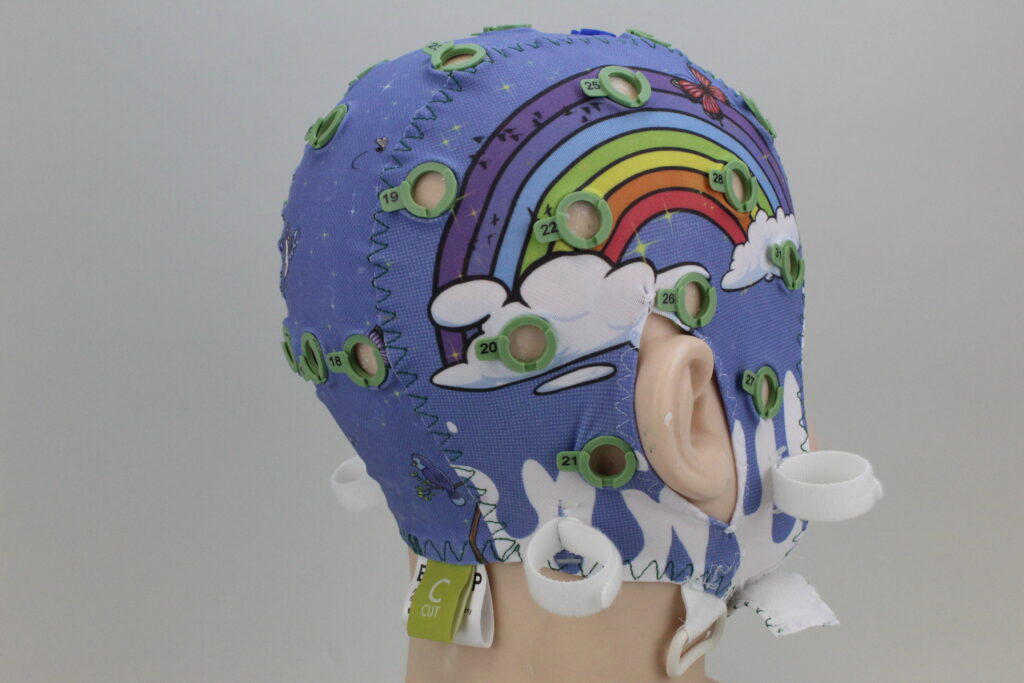
GrafiCap Dinosaurs design (G113, by Ohmz) is pictured on a mannequin. The cap has 32 green actiCAP snap holders embedded in the fabric and a fun dinosaur pattern can be seen between the holders for fun EEG recordings.
Make EEG recordings fun for your younger participants by using caps with playful printed patterns!

GrafiCap

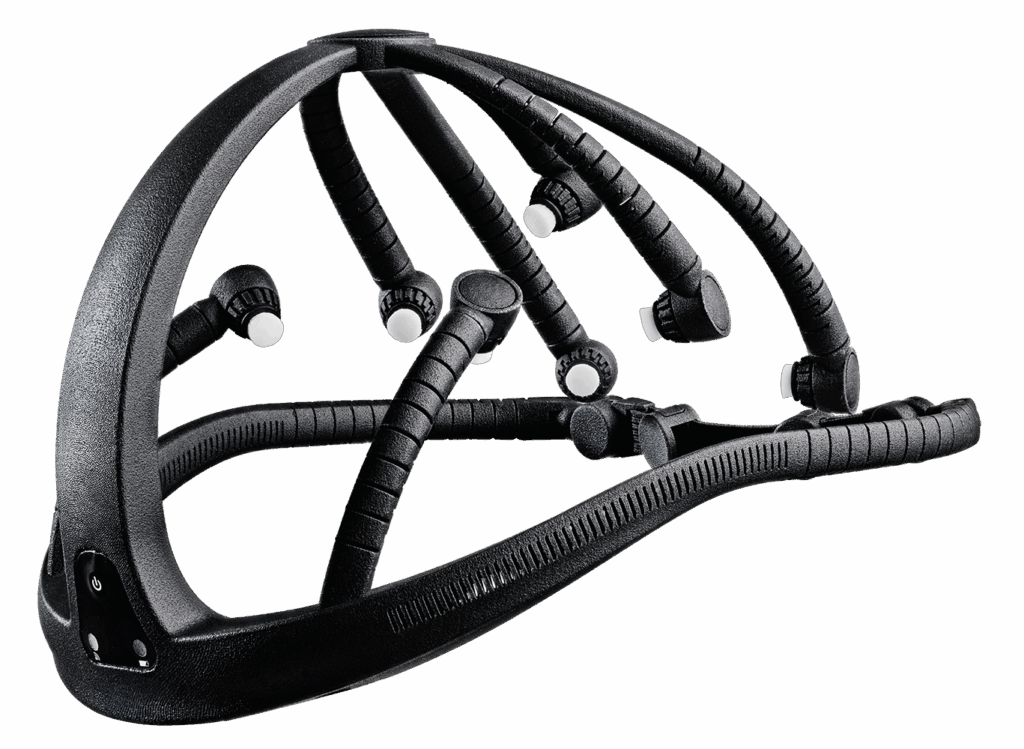
A black plastic EEG headset (the X.on) floats in the picture. It has seven electrode positions with white sponges for recording EEG data. As a wireless device it can be used in non-traditional recording locations.
The X.on is a mobile EEG platform that can be used with PEER to collect ERP data in places and populations you never would have imagined. It delivers research quality data at a more affordable price point.

X.on + PEER

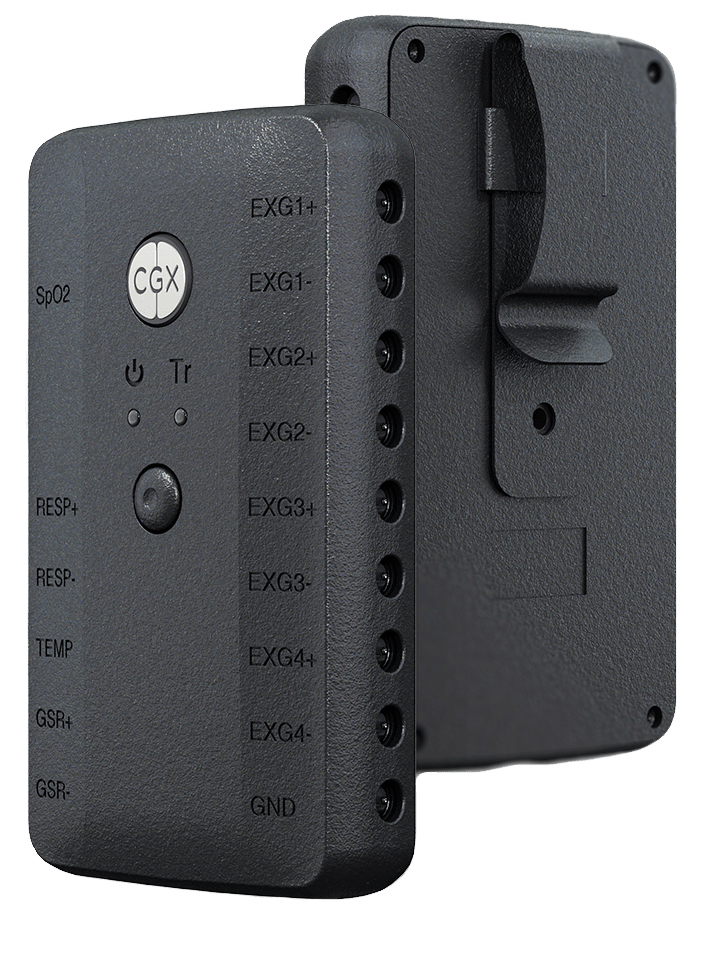
The AIM Physiological Monitor is a compact, sophisticated unit that adds heart rate, temperature, respiration, GSR, PPG/HRV/SpO2 and more to any experiment.

AIM Physiological Monitor

Black EEG cap with integrated electrodes connected via cable to a white Brain Vision LiveAmp amplifier unit, displayed on a neutral mannequin head
The LiveCap is a fully customizable cap, especially designed for use with LiveAmp amplifiers to provide a highly comfortable mobile EEG recording solution.

LiveCap

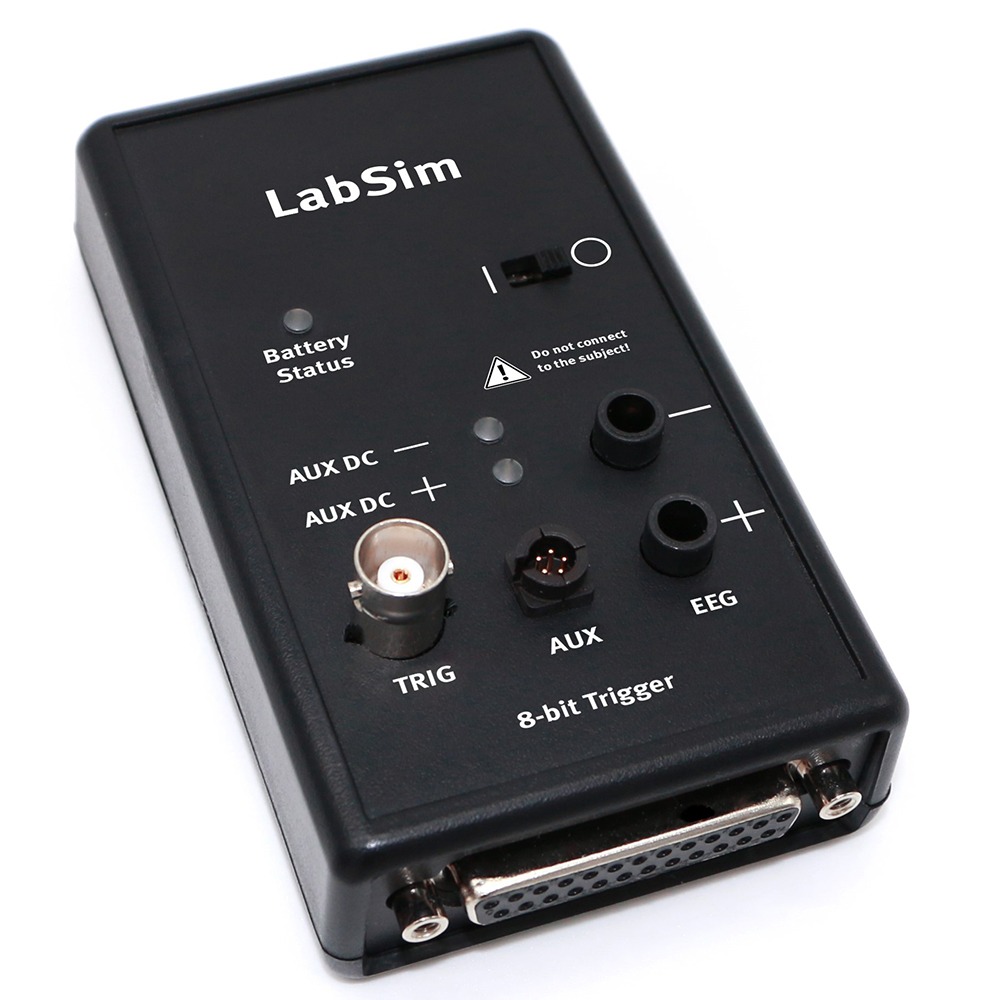
Close-up of the LabSim device, an 8-bit trigger signal generator used for simulating physiological signals in EEG/ERP research systems. The unit features ports labeled AUX DC, TRIG, AUX, EEG, and a power switch, along with a warning indicating it should not be connected to human subjects
LabSim is a small and handy signal generator, able to generate signals required to test the input ports of different amplifiers.

LabSim

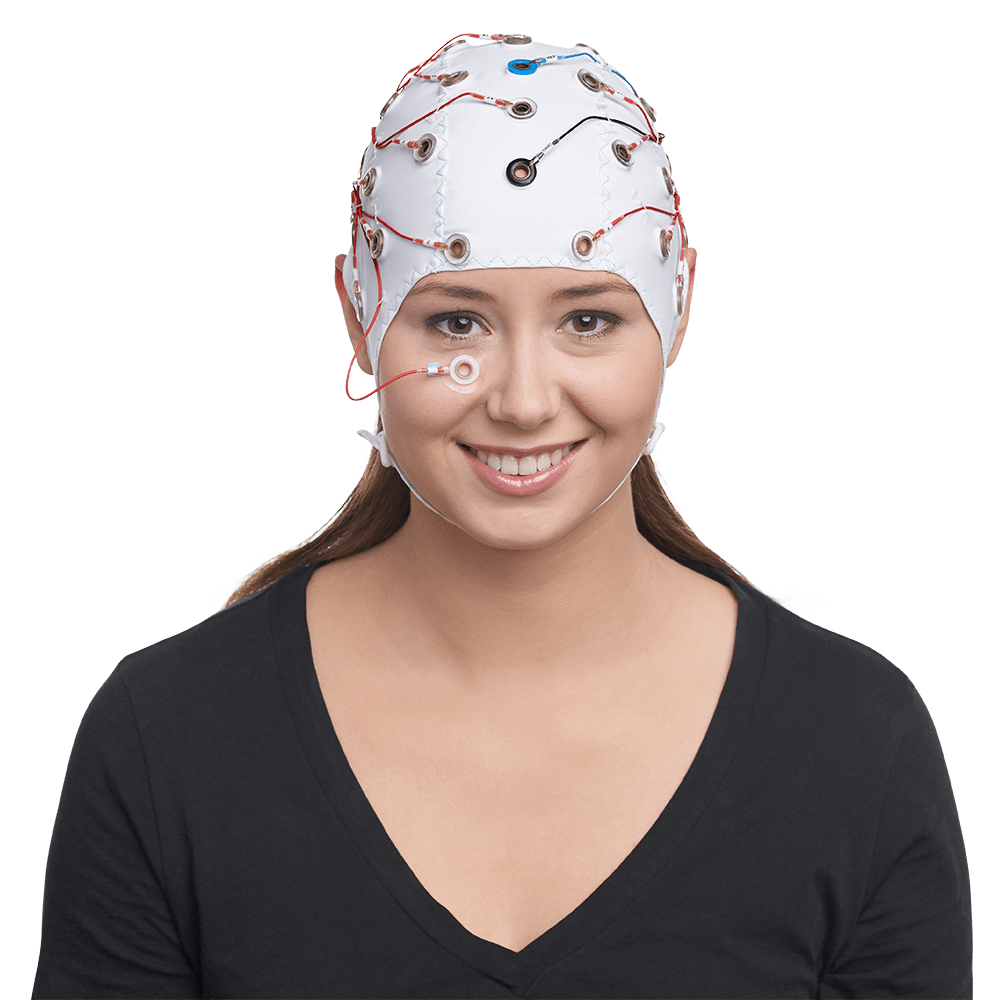
Frontal view of the P BrainCap worn by a person
The BrainCap makes the preparation time very fast and assures high subject comfort as well as high-quality data recordings.

BrainCap

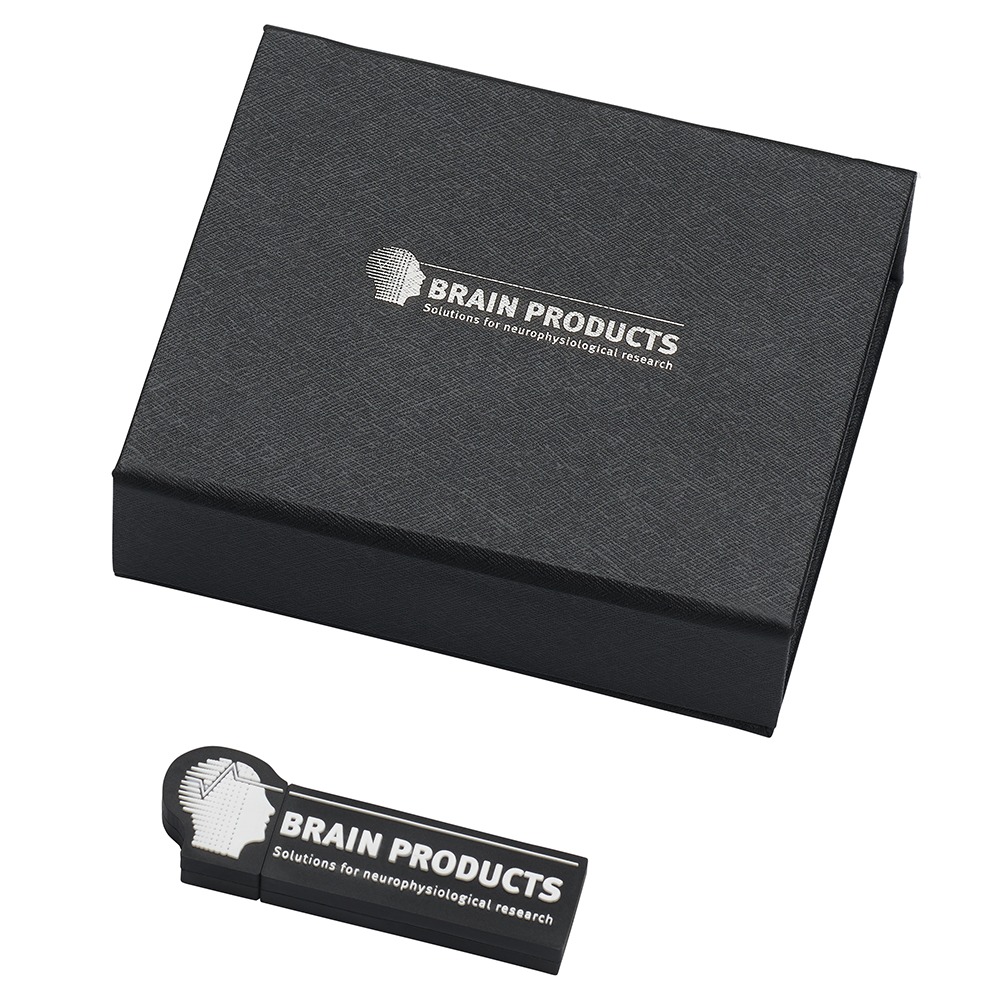
P Application Suite trial kit by Brain Products
In order to make it easier and more convenient to evaluate our software solutions for EEG/EP recordings and analysis we are introducing a new trial concept, the so-called “Application Suite Trial Package”.

Application Suite Trial Package

P Analyzer charts
The analysis software for EEG/ERP research

Analyzer 2

Frequently Asked Questions

A stand-alone license is physically plugged into the computer that will run BVA2. This is the typical use case when a single person at a time is processing data. Whereas, a network license is plugged into one computer, and provided that the firewalls are configured properly, the other computers in the lab area can access the license(s). This is very useful when you have multiple lab members working in one office or lab area on the same sub-network. The network license could have a single seat on it, so only one lab member at a time can run BVA2. Or it could have N multiple seats on it, so N different lab computers (including the server itself) can run BVA2 concurrently.  If you have more questions about our software please reach out to our Scientific Consultant team and we will be happy to answer your questions.

Additional Application Fields and Solutions

Website Search

Schedule a call with our Consultants​

Please select your area to schedule an introductory call with one of our Scientific Consultants.

script here