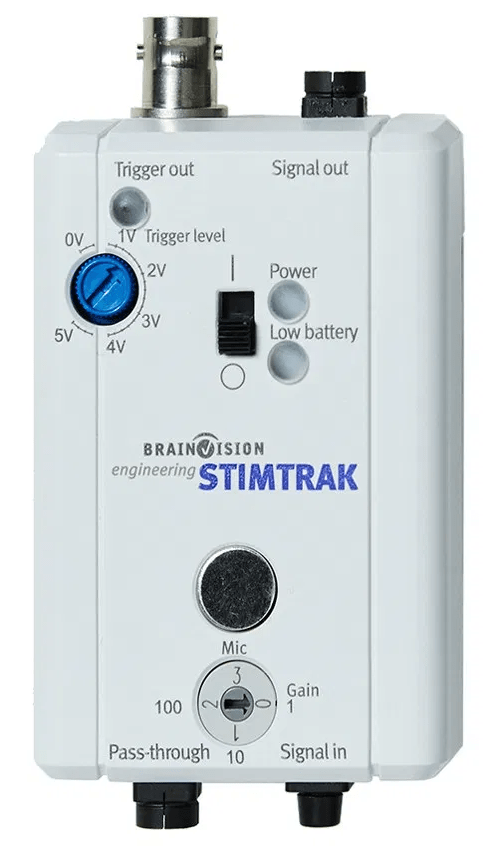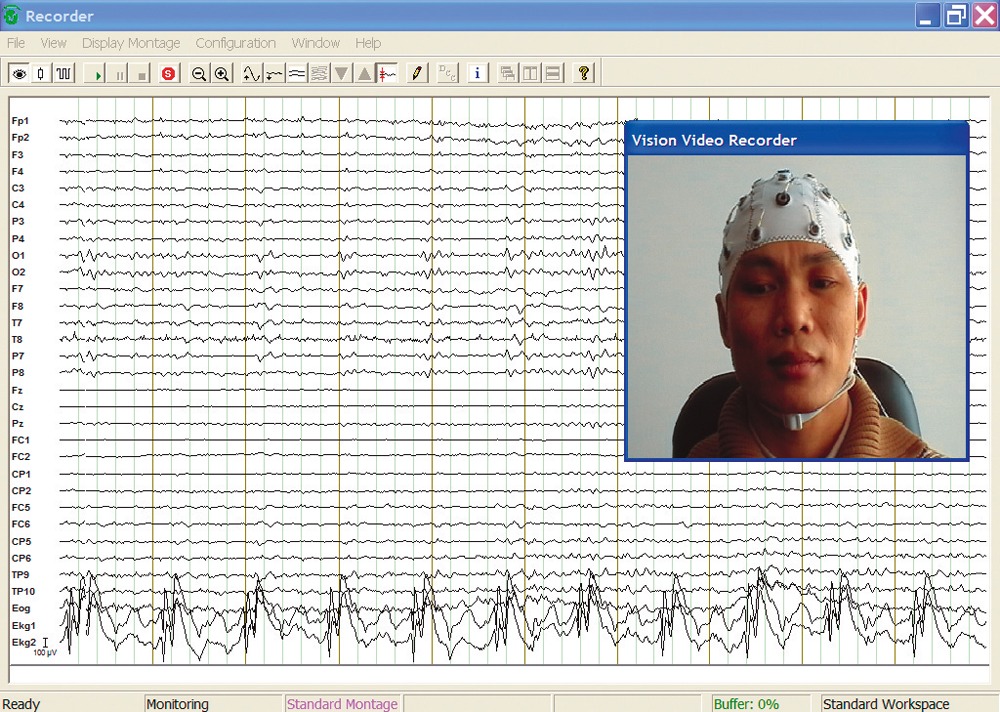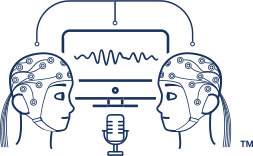
Auditory brainstem responses (ABR) or brainstem auditory evoked potentials (BAEP) measure the electrical activity of the brain’s auditory system in response to the presentation of acoustic stimuli (e.g., clicks, chirps, tones, or speech). ABR and BAEP are characterized by small amplitude (e.g., ≤ 1µV) and short latency (e.g., 5-7 peaks within 10ms) signals, so specialized electrodes, pre-amplifiers, and data acquisition systems with high sampling rates (e.g., ≥ 10kHz) are needed to reliably capture these signals. To facilitate generation of the ABR/BAEP during data pre-processing, it is critical to record the precise onset of acoustic stimuli that are used to activate the brain’s auditory pathway. The timing of sound files within computer operating systems is not precise enough for ABR work (and sometimes not even for normal ERP studies), so we offer a dedicated ABR solution package that helps alleviate headaches associated with timing offsets and jitter in event markers. We also offer accessories that give researchers the ability to adjust marker onset during analysis based on the actual audio signals in the recording. ABR is a valuable method on its own, and researchers may choose to combine it with EEG to answer more complex questions about audition and speech perception.