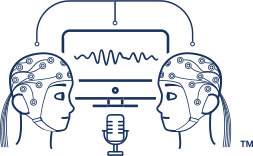
Trademarked Brain Vision blue icon representing Hyperscanning

Hyperscanning

Hyperscanning involves recording brain activity from more than one person at the same time. There are many advantages to these types of paradigms – particularly when it comes to understanding changes in cognition and behavior associated with social interactions and child development. Participant mobility, although not essential for hyperscanning studies, is helpful for recording brain activity in more real-world environments. We offer hyperscanning solutions for both electroencephalography (EEG) and functional near-infrared spectroscopy (fNIRS), and the combination of the two methods. One challenge of hyperscanning paradigms is being able to synchronize the delivery of event markers across multiple devices. To address this challenge, we offer reliable trigger solutions that help eliminate the guesswork associated with verifying the timing of stimulus presentation. Another challenge of hyperscanning paradigms, particularly when relying on wireless data transmission, is the number of systems that can be in the room at the same time. Our systems allow for multiple modes of data acquisition, including the ability to save the data to a microSD card onboard the device. This ensures that no data are lost, even if the wireless transmission is interrupted.
Hyperscanning Related Products

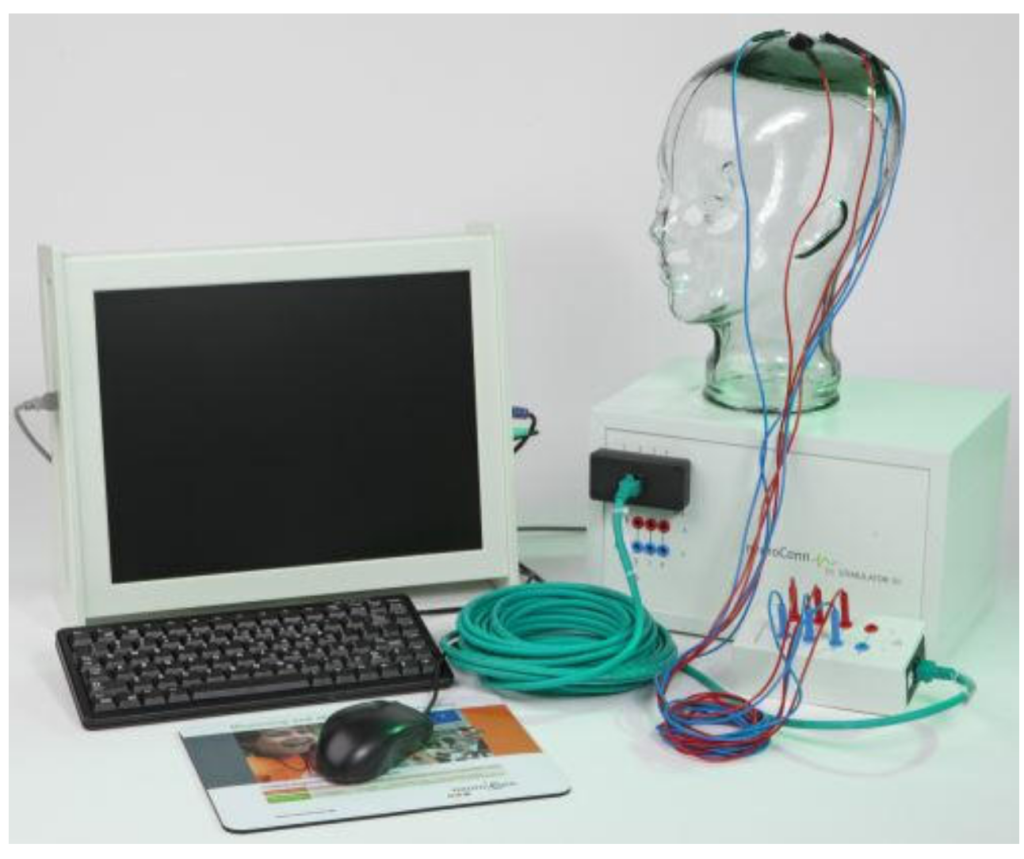
neuroConn DCMC is pictured with its control panel PC, keyboard, and mouse, along with 4x stimulation channels connected to a glass head via rubber electrodes.
An expandalbe multi-channel transcranial electrical stimulation (HD-tES) platform.

neuroConn DC-STIMULATOR MC

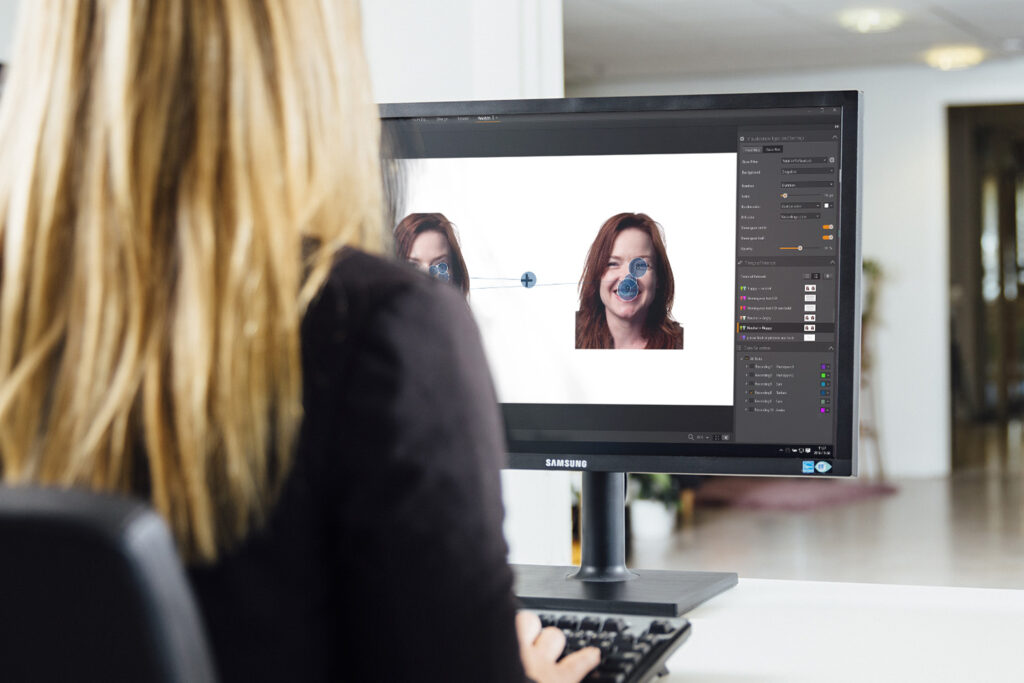
A researcher with long blond hair sits in front of a computer that is running Tobii Pro Lab software. On the software, they are reviewing the eye tracking data from someone doing a task that showed different faces. The software interface buttons and gaze position can be seen on screen.
Use Tobii Pro Lab to control your Tobii Pro mobile or stationary eyetrackers and then analyze the gaze, microsacces, or pupilometry afterward.

Tobii Pro Lab

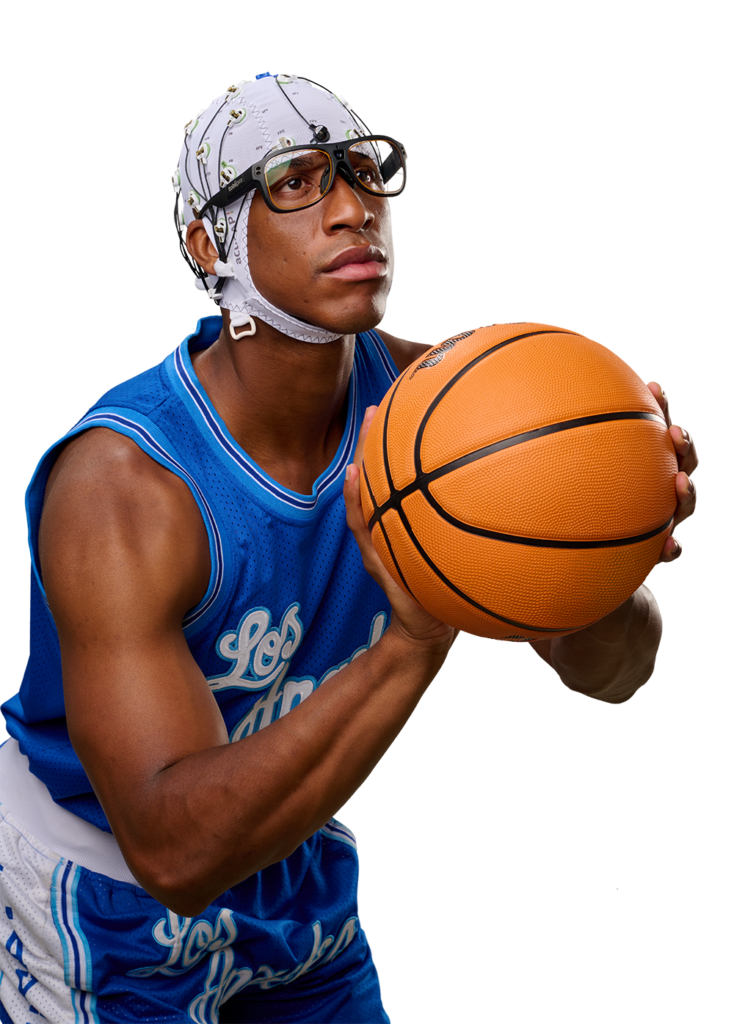
A basketball player in a blue uniform sets up to shoot the ball while wearing an EEG cap and electrodes and the Tobii Pro Glasses for wearable eyetracking.
The Tobii Pro Glasses 3 is a wearable eye tracker designed for real-world research.   You can combine its binocular eye tracking (0.6° accuracy, 50 or 100Hz) and built-in scene camera and microphone to capture precise, real-time eye tracking data while studying behavior outside the lab.

Tobii Pro Glasses

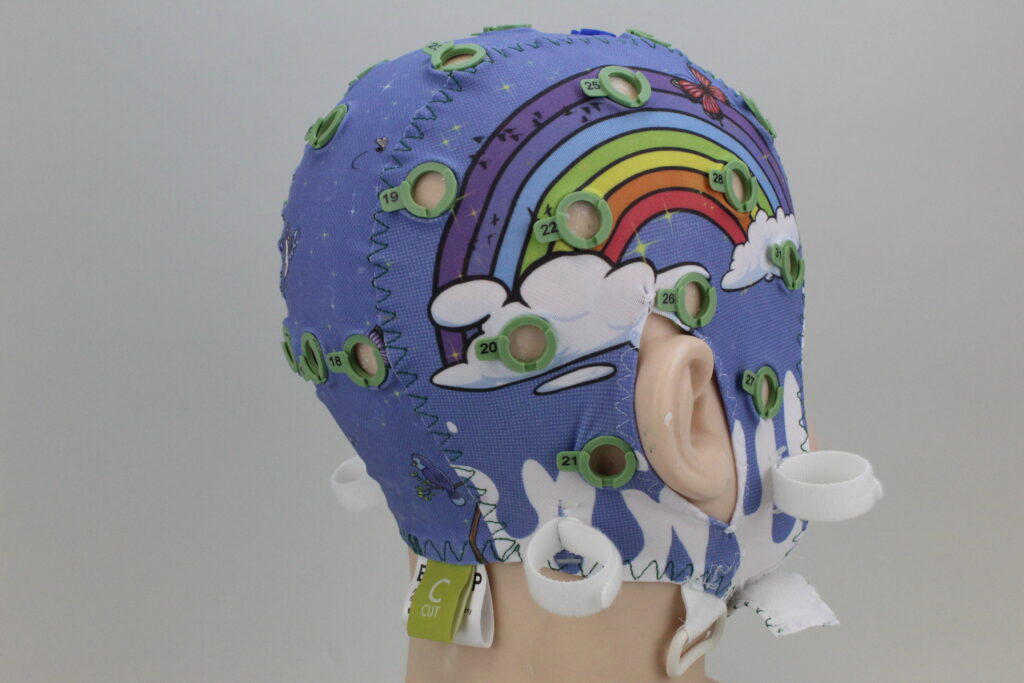
GrafiCap Dinosaurs design (G113, by Ohmz) is pictured on a mannequin. The cap has 32 green actiCAP snap holders embedded in the fabric and a fun dinosaur pattern can be seen between the holders for fun EEG recordings.
Make EEG recordings fun for your younger participants by using caps with playful printed patterns!

GrafiCap

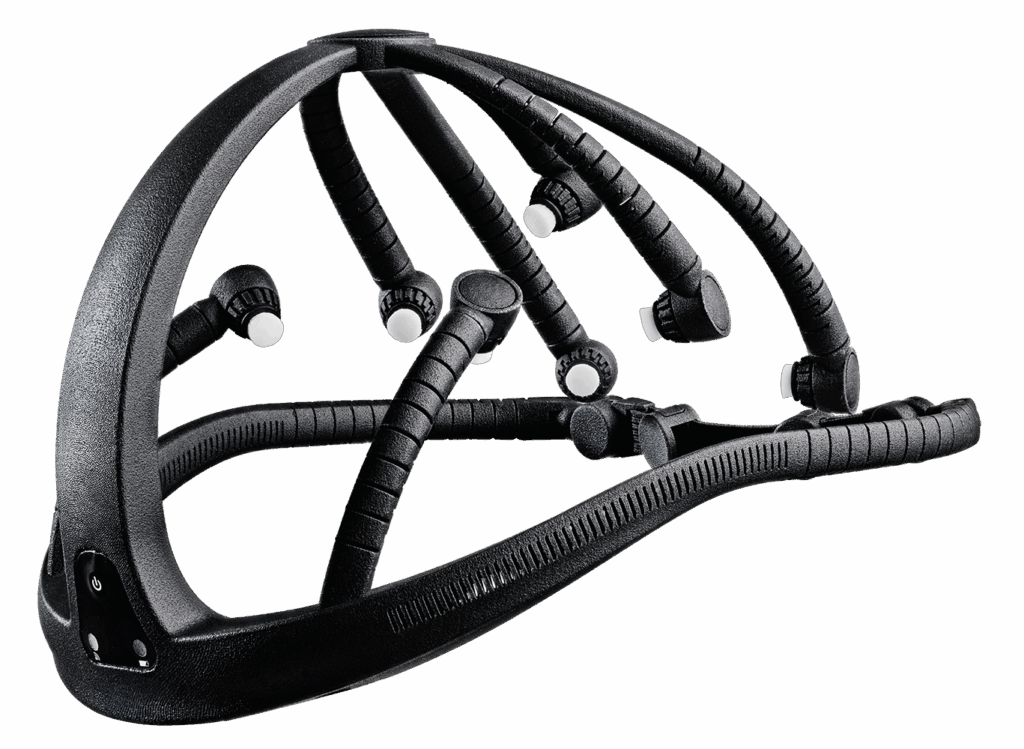
A black plastic EEG headset (the X.on) floats in the picture. It has seven electrode positions with white sponges for recording EEG data. As a wireless device it can be used in non-traditional recording locations.
The X.on is a mobile EEG platform that can be used with PEER to collect ERP data in places and populations you never would have imagined. It delivers research quality data at a more affordable price point.

X.on + PEER

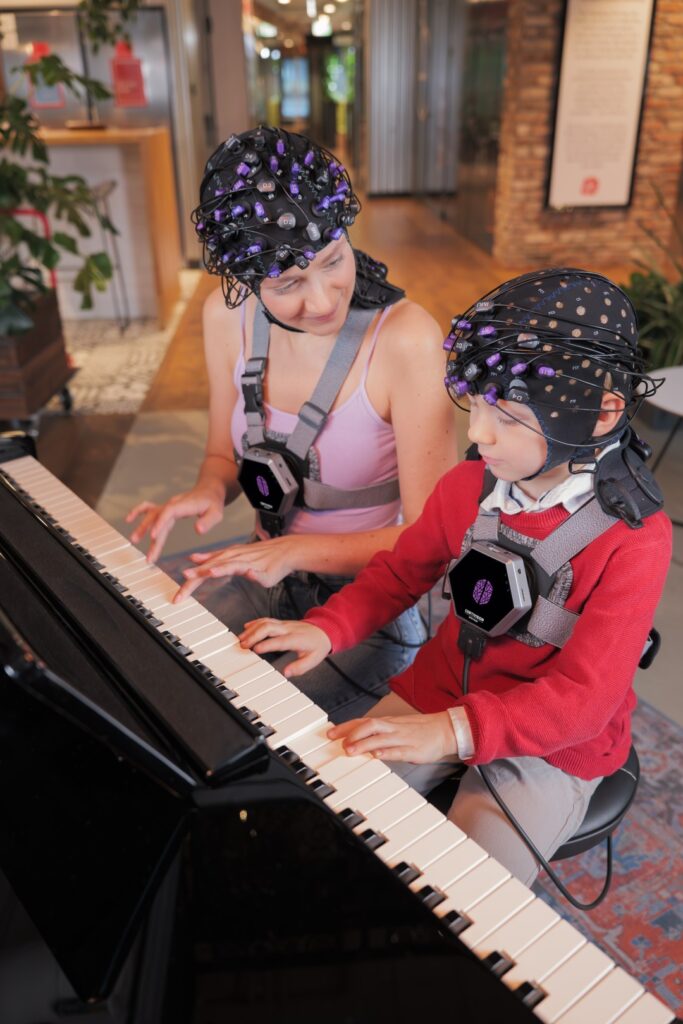
A woman and child sit side by side at a piano to play music while both simultaneously wear the wireless and lightweight Cortivision SPECTRUM fNIRS system to record data during a hyperscanning paradigm.
The Cortivision SPECTRUM is a lightweight, wearable, wireless fNIRS platform expandable from 12 sources/8 detectors to up to 48 sources/32 detectors for whole head and DOT imaging.

Cortivision SPECTRUM

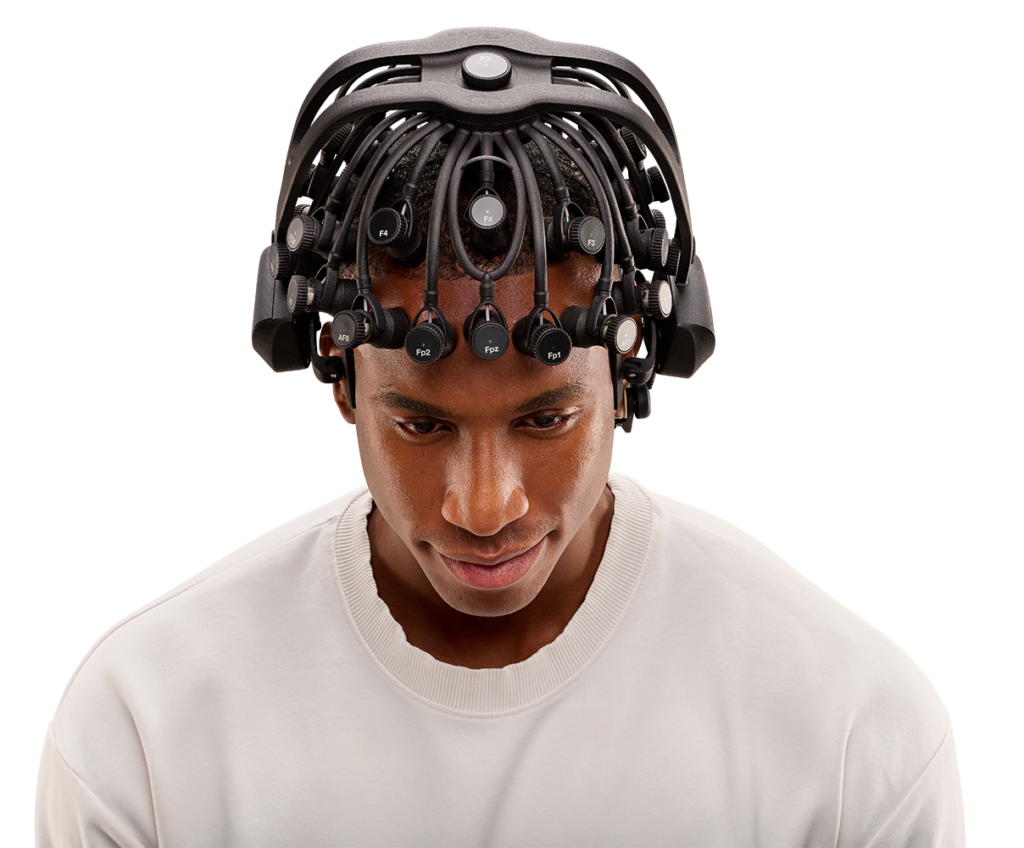
A Quick-32r headset sits on a man's head while he tilts his head forward slighly showing the top of the headset.
The Quick-32r is a complete rethinking of the capabilities of a dry EEG headset. With industry-leading signal quality, built-in noise rejection, long-term comfort, enhanced usability, and a unique built-in LED impedance indicators for real-time contact quality.

Quick-32r

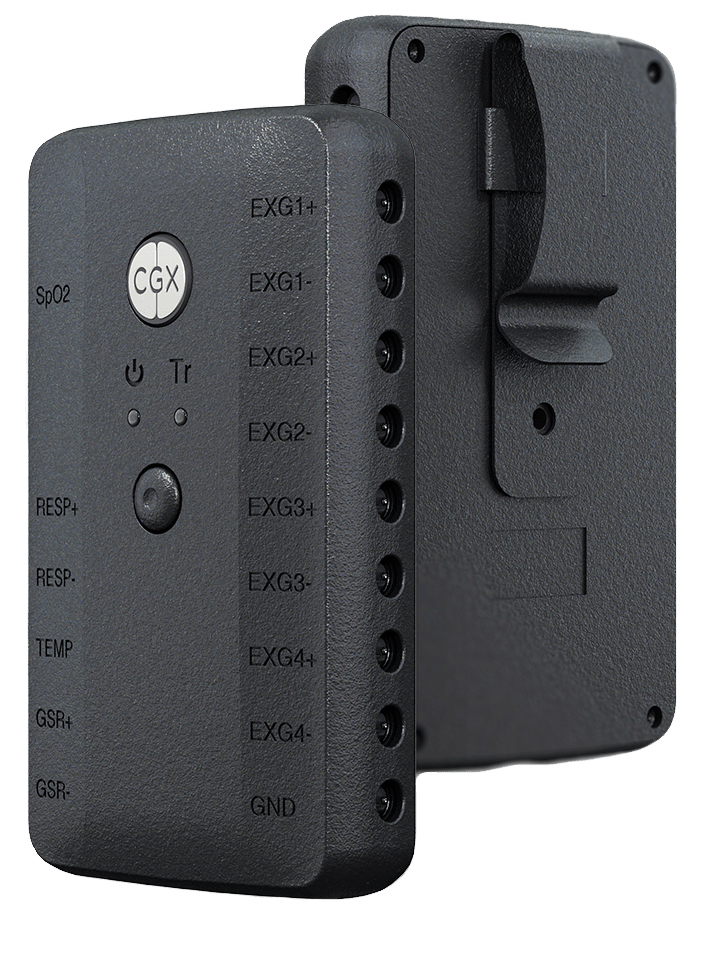
The AIM Physiological Monitor is a compact, sophisticated unit that adds heart rate, temperature, respiration, GSR, PPG/HRV/SpO2 and more to any experiment.

AIM Physiological Monitor

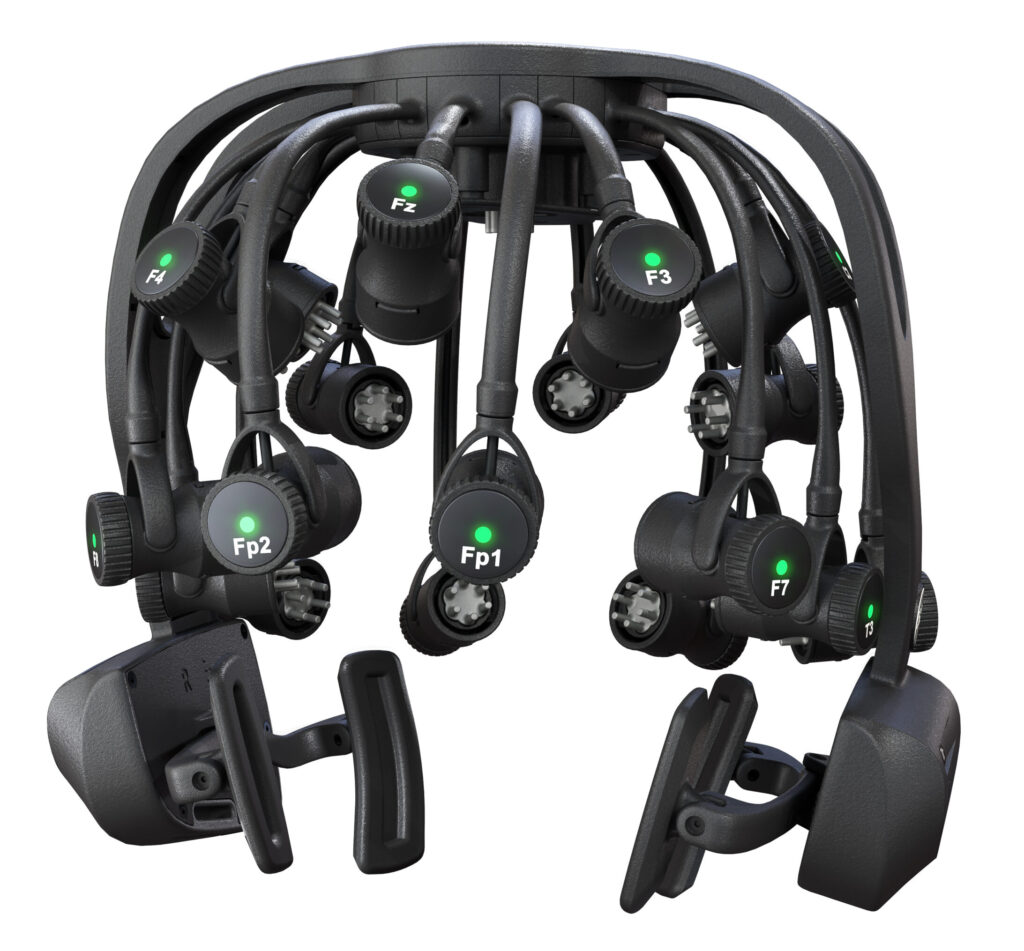
Front view of the Quick-20r EEG headset with labeled electrode positions
The Quick-20r v2 is a complete rethinking of the capabilities of a dry EEG headset. With industry-leading signal quality, active electrodes for unparalleled noise rejection, long-term comfort, enhanced usability, and a unique on-board impedance checking system for instant confirmation.

Quick-20r v2

The USB 2 Adapter (also known as BUA) serves as a USB interface to connect any BrainAmp amplifier with the recording computer.

USB 2 Adapter (BUA)

Additional Application Fields and Solutions

Website Search

Schedule a call with our Consultants​

Please select your area to schedule an introductory call with one of our Scientific Consultants.

script here