Photo Sensor

Measuring screen brightness and generating triggers at stimulus onset

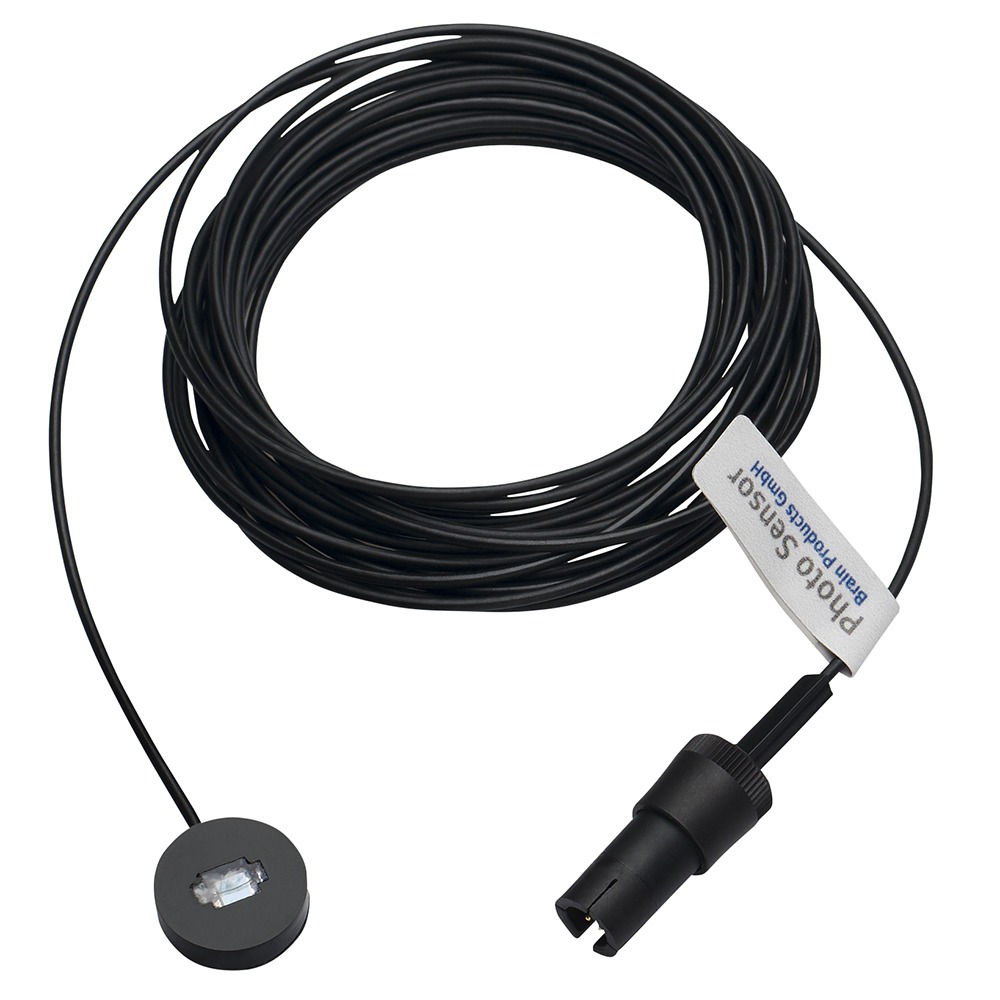
The Photo Sensor is a valuable tool to check the performance of a monitor or any experiment control software. This becomes essential if visual stimuli are planned to be presented on a tablet or cell phone display.

It can easily be attached to any screen with double-sided adhesive washers. Connected to the auxiliary input of an amplifier, it provides information on the brightness of the screen. In other words: The signal delivered by the sensor indicates when the screen turns brighter or darker.

Used in combination with StimTrak, a trigger is generated when the amount of light is higher than the (customizable) threshold, which means that the exact onset of any visual stimulus can be marked.
Related Products

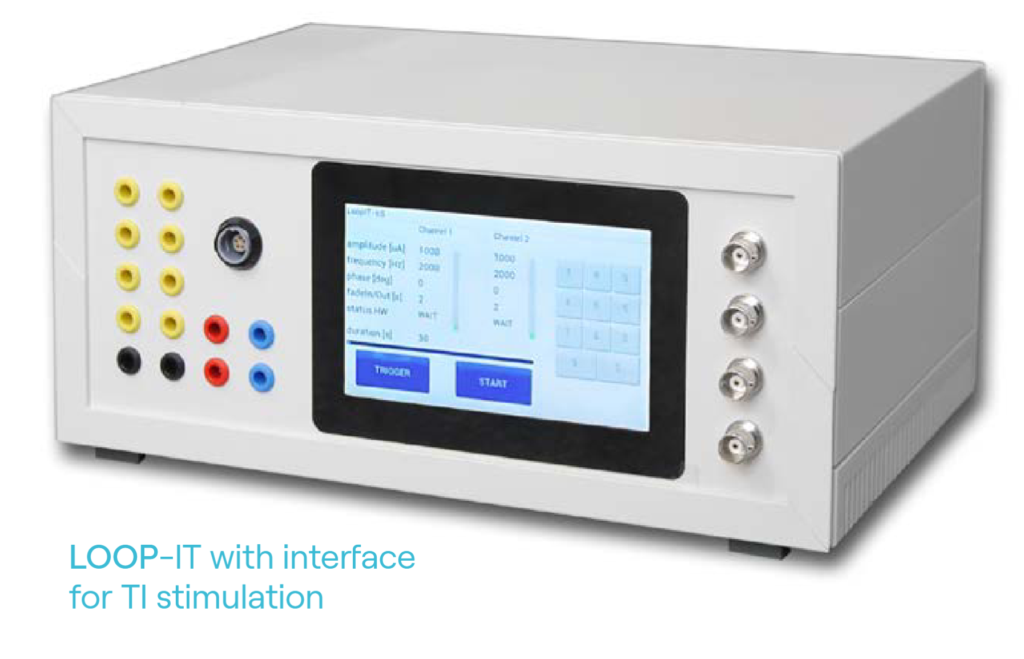
The LOOP-IT's front panel is depicted with its touchscreen interface, 8x EEG inputs, 2x tES outputs, 4x BNC outputs, and a special port.
The neuroConn LOOP-IT is an all-in-one solution for closed loop EEG-tES, TMS-EEG, and EEG-tFUS.

neuroConn LOOP-IT

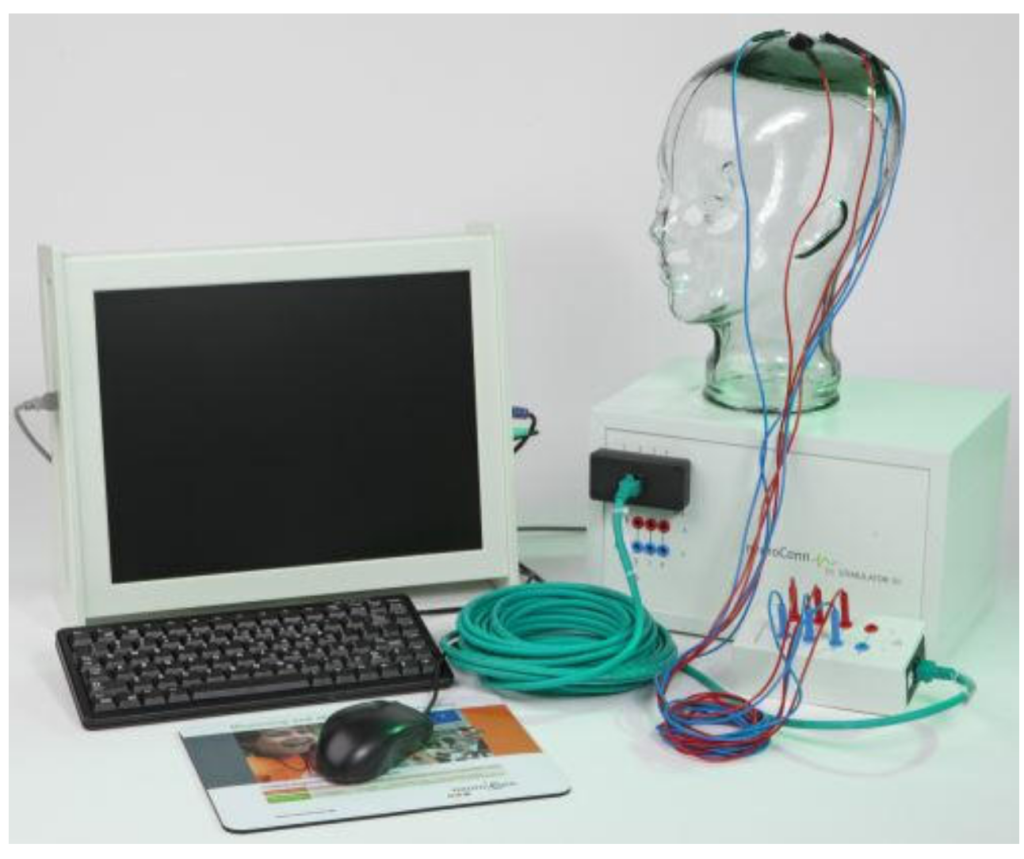
neuroConn DCMC is pictured with its control panel PC, keyboard, and mouse, along with 4x stimulation channels connected to a glass head via rubber electrodes.
An expandalbe multi-channel transcranial electrical stimulation (HD-tES) platform.

neuroConn DC-STIMULATOR MC

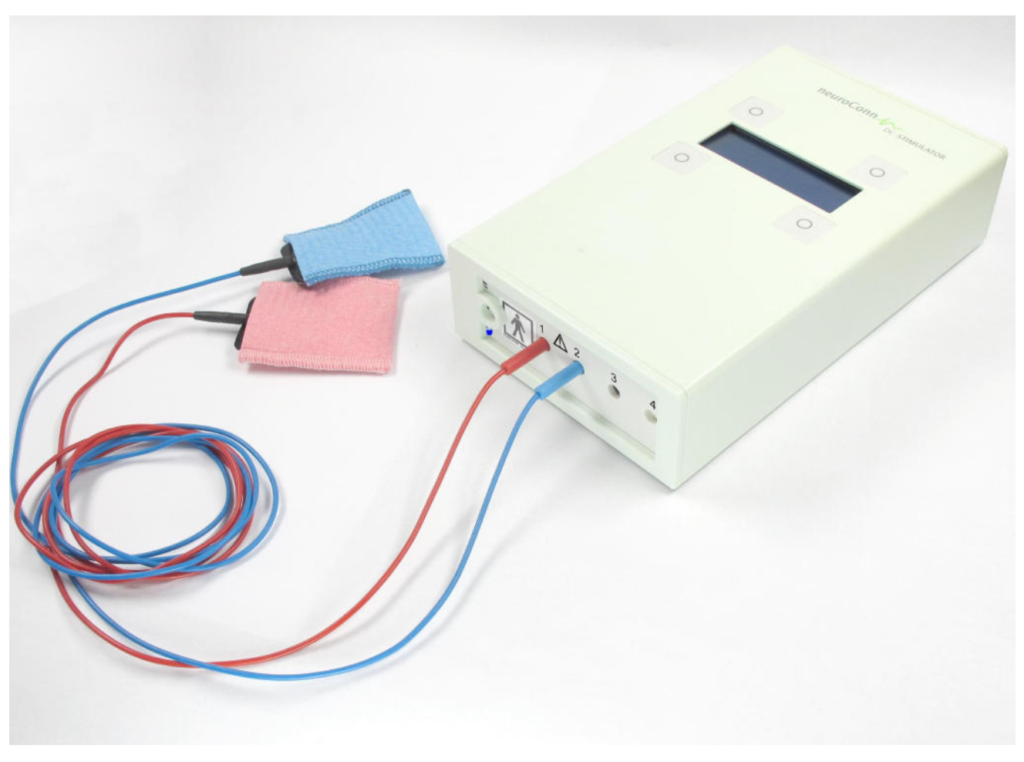
neuroConn DC-STIMULATOR PLUS is depicted laying on a table with a pair of rubber/sponge electrodes connected.
A capable and powerful one-channel transcranial electrical stimulation (tES) tool.

neuroConn DC-STIMULATOR PLUS

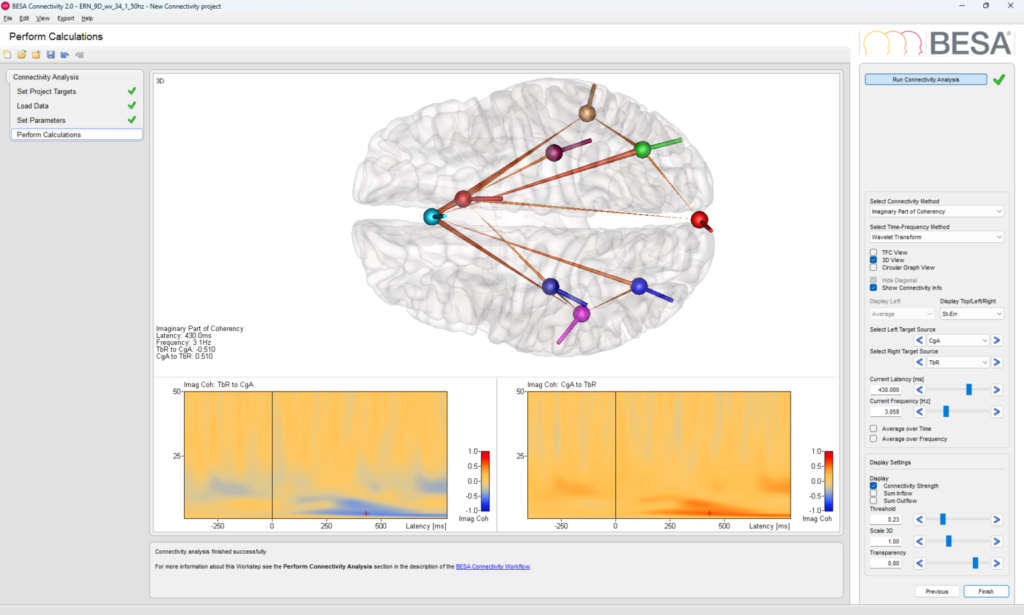
The BESA Connectivity software interface is a workflow-based GUI that walks you through the connectivity analysis of your choosing. Here you see the results of a Coherence analysis between multiple regional sources (source space, frequency anlaysis).
BESA Connectivity is a stand-alone module that extends BESA Research with streamlined, user-guided workflows for time–frequency and connectivity analysis of EEG and MEG data (in both scalp and source space). With multiple time–frequency and connectivity analysis methods supported, you can run batch analyses across subjects and easily visualize results using a variety of 2D and 3D renderings. The output is also ready for direct import into BESA Statistics.

BESA Connectivity 2.0

View Other Application Fields

Website Search

Schedule a call with our Consultants​

Please select your area to schedule an introductory call with one of our Scientific Consultants.

script here