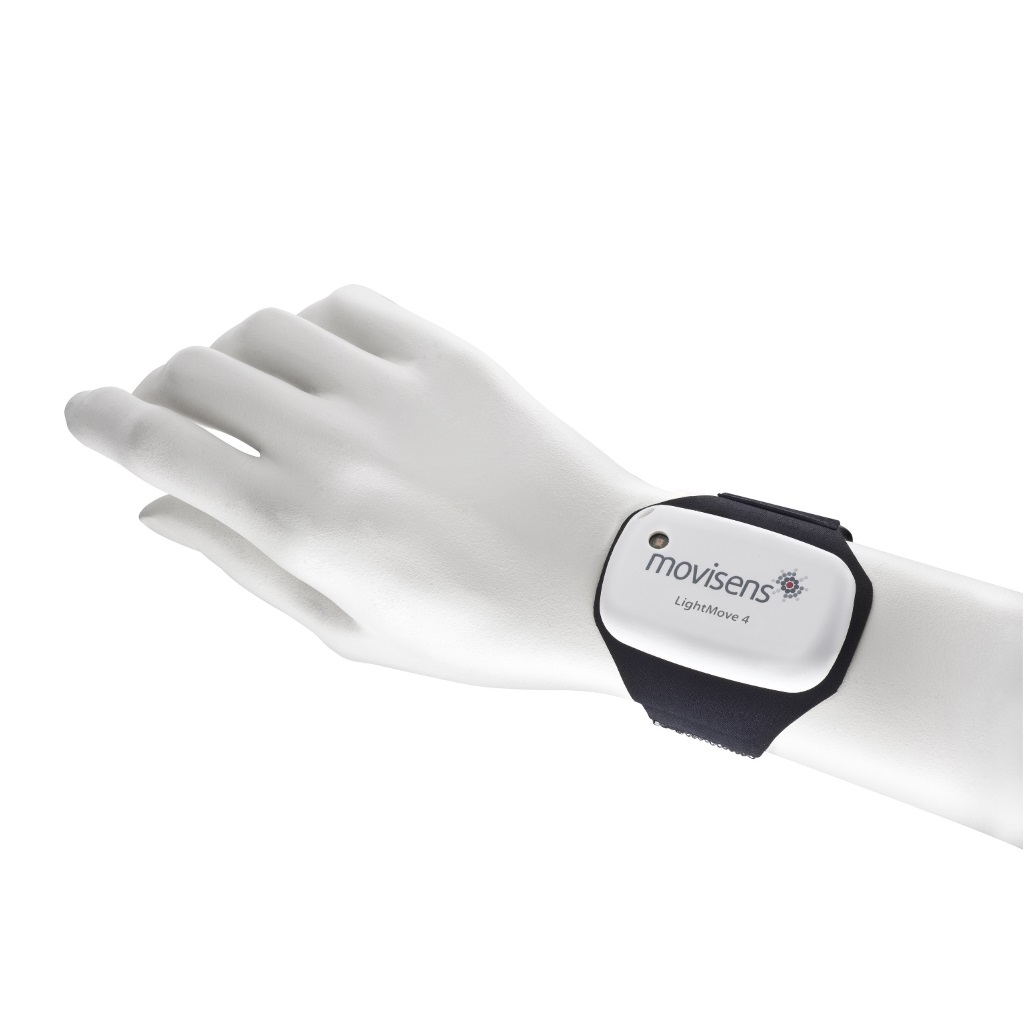
As part of the new sensor generation, the LightMove 4 activity sensor combines the previous benefits of the proven LightMove 3 with the 4th generation enhancements, allowing us to address a wide range of researchers needs, implement their requests, and further enhance the quality of the sensors. Thus, the LightMove 4 strengthens its position as the go to device for researchers who care about high quality data.
The 4th sensor generation offers researchers numerous advantages, including:
- New design for optimal handling: The improved case offers a sleek design aesthetic offering many practical advantages. The waterproof and dirt-repellent housing coupled with the improved carrying systems make the sensors simpler, more versatile and safer to use.
- More data collection capabilities: Thanks to the integration of the latest technologies, the 4th generation sensors now incorporate a Gyroscope (Angular Rate Sensor).
- Improved analysis possibilities: The highly acclaimed acceleration sensor also received an overhaul, and now records the measurement data at an even higher resolution. Consequently, we’ve achieved significant improvements in the obtainable results, especially in the analysis of sedentary behavior and non-wear detection.
- Increased data retention: A new Bluetooth buffer ensures the preservation of data during disconnection, with the buffered data transferred upon reconnection; thus guaranteeing a continuous data recording at all times.
- Broader research applications: Already a class leader in quality data acquisition for many research areas, these improvements expand the LightMove 4‘s research capabilities. All the while remaining the best choice for researcher’s requiring high quality physical activity data and light levels.
The LightMove 4 adds five channels of light detection to the renown physical activity measurement capabilities of the Move 4. This combination enables a more detailed analysis and understanding of participant behavior in the context of daily living. The high sensitivity of the light sensor enables the recording of even the most subtle levels of lighting.
The sensor records a whole suite of measurement signals (5 Channels of light detection, 3D-Accelerometer, Gyroscope, Air Pressure and Temperature) for up to 4 weeks, providing a rich source of data for further analysis. The LightMove 4 can also calculate secondary parameters on board the sensor, and transmit the calculated results via Bluetooth Smart.
Our DataAnalyzer software enables the easy calculation of a multitude of secondary parameters from the raw data captured by the sensor. Parameters such as illuminance (lux), Brightness (from darkness to sunlight), Color Temperature, Activity Class, Steps, Energy Expenditure and Metabolic Equivalent of Task (MET) are available, in addition to a suite of sleep parameters.
The LightMove 4 opens new possibilities for researchers who understand the interplay between light and physical activity, allowing their research to expand and contribute to this growing body of knowledge.