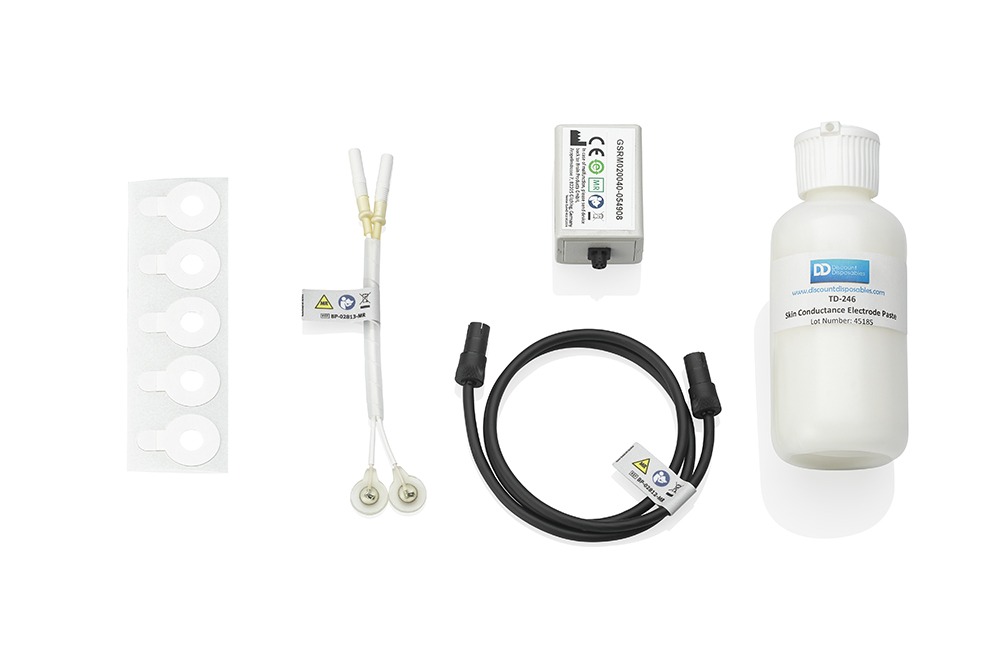
GSR MR Sensor

GSR (Galvanic Skin Response) sensor for fMRI

Skin conductance (SC) has for decades been one of the most employed measures in psychophysiologic research. As a sensitive parameter for emotional and cognitive states, stress and pain, SC has also been widely used in psychiatric research.

Our MR amplifier development team devised an extremely compact but heavily shielded DC instrumentation amplifier capable of measuring conductance directly using 0.5 V constant voltage.

GSR MR Sensor at a glance

  • interfaces with the bipolar BrainAmp ExG MR via the ExG AUX box
  • records the GSR synchronously with the EEG

Don’t miss to add this valuable accessory to your already existing BrainAmp ExG MR amplifier and record GSR of laboratory-standard quality even during functional MRI!
Related Products

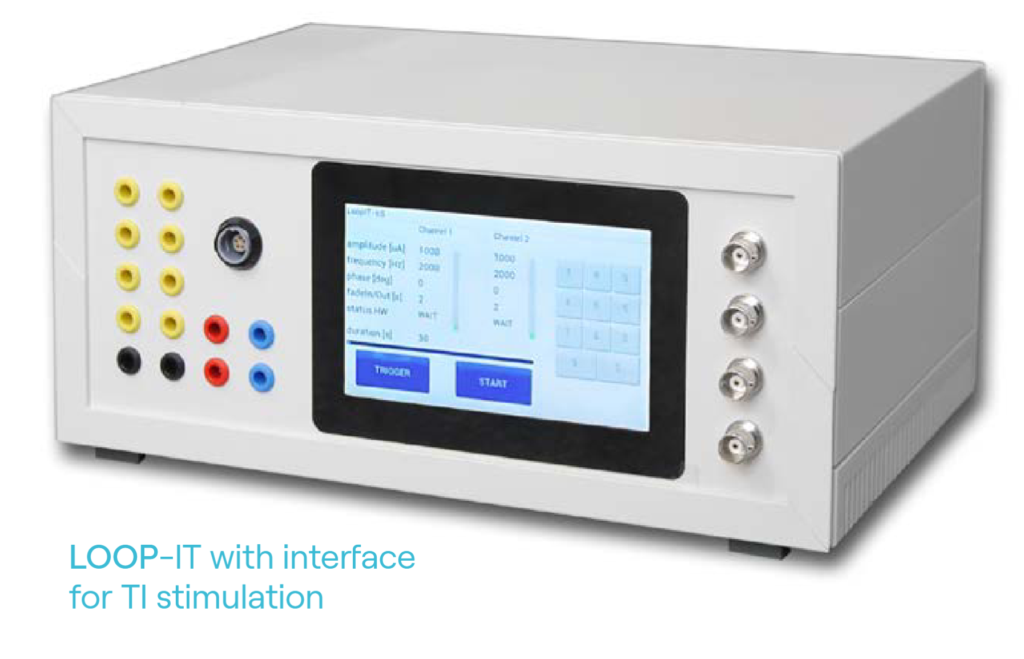
The LOOP-IT's front panel is depicted with its touchscreen interface, 8x EEG inputs, 2x tES outputs, 4x BNC outputs, and a special port.
The neuroConn LOOP-IT is an all-in-one solution for closed loop EEG-tES, TMS-EEG, and EEG-tFUS.

neuroConn LOOP-IT

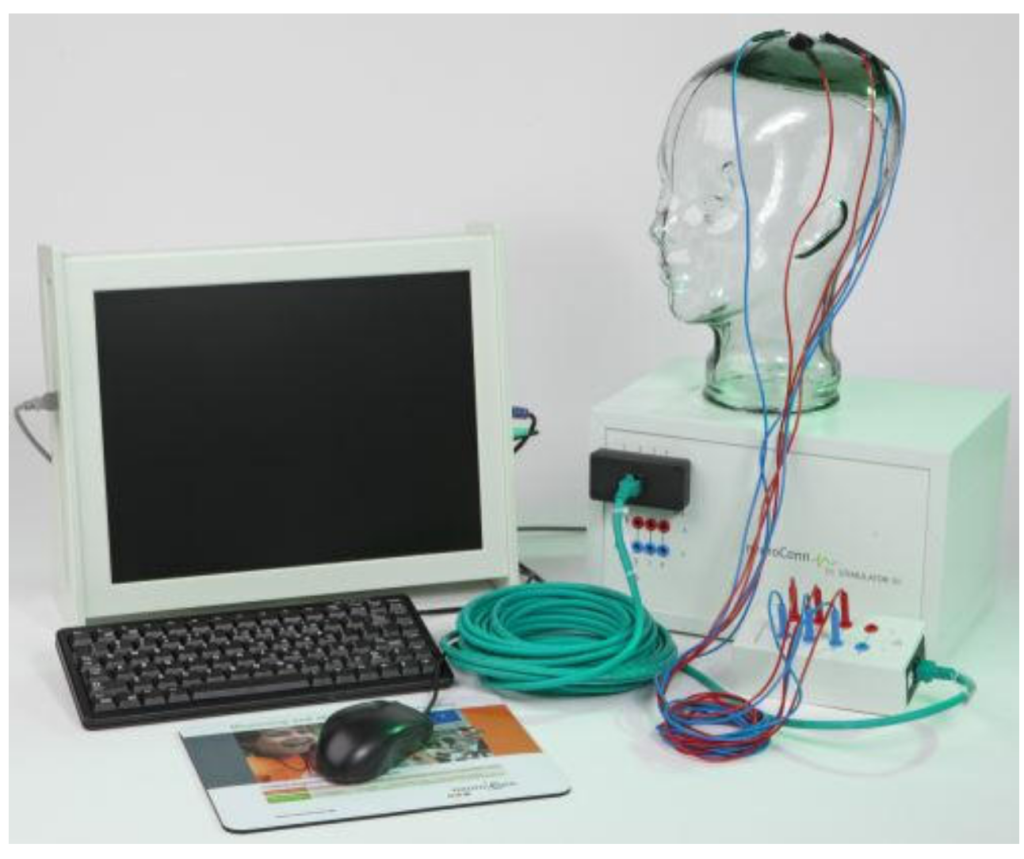
neuroConn DCMC is pictured with its control panel PC, keyboard, and mouse, along with 4x stimulation channels connected to a glass head via rubber electrodes.
An expandalbe multi-channel transcranial electrical stimulation (HD-tES) platform.

neuroConn DC-STIMULATOR MC

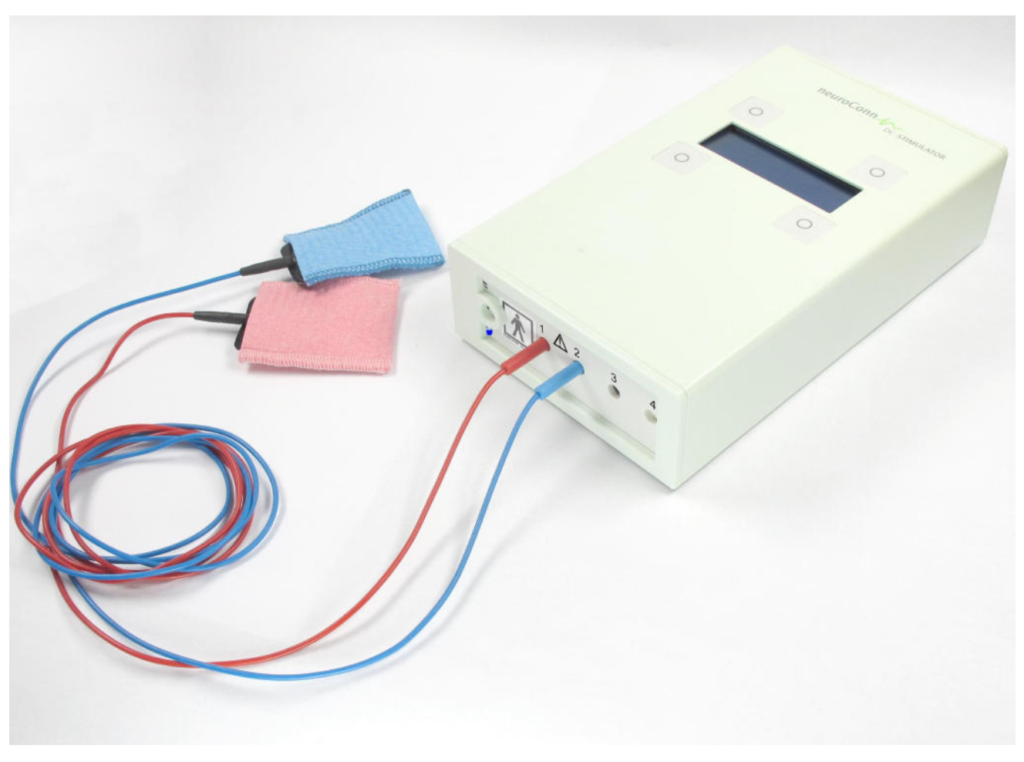
neuroConn DC-STIMULATOR PLUS is depicted laying on a table with a pair of rubber/sponge electrodes connected.
A capable and powerful one-channel transcranial electrical stimulation (tES) tool.

neuroConn DC-STIMULATOR PLUS

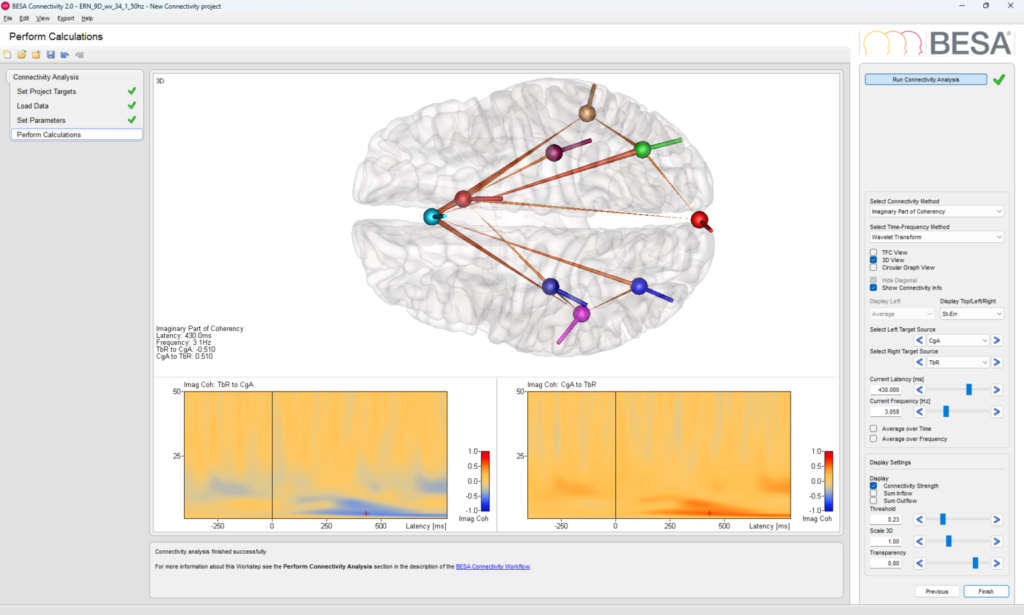
The BESA Connectivity software interface is a workflow-based GUI that walks you through the connectivity analysis of your choosing. Here you see the results of a Coherence analysis between multiple regional sources (source space, frequency anlaysis).
BESA Connectivity is a stand-alone module that extends BESA Research with streamlined, user-guided workflows for time–frequency and connectivity analysis of EEG and MEG data (in both scalp and source space). With multiple time–frequency and connectivity analysis methods supported, you can run batch analyses across subjects and easily visualize results using a variety of 2D and 3D renderings. The output is also ready for direct import into BESA Statistics.

BESA Connectivity 2.0

View Other Application Fields

Website Search

Schedule a call with our Consultants​

Please select your area to schedule an introductory call with one of our Scientific Consultants.

script here