
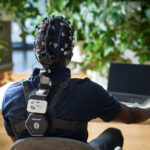
Cortivision PHOTON CAP

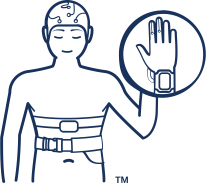
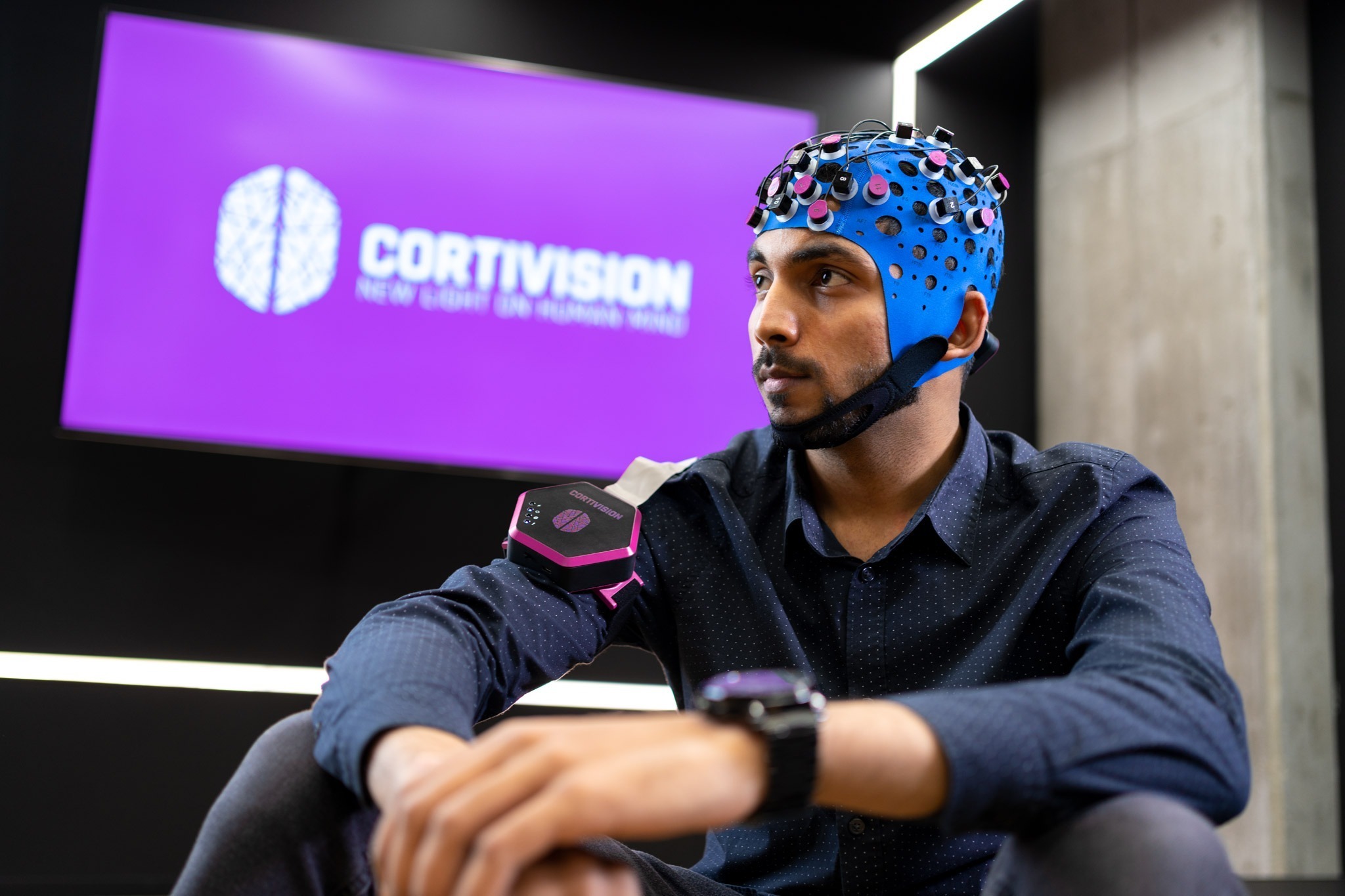
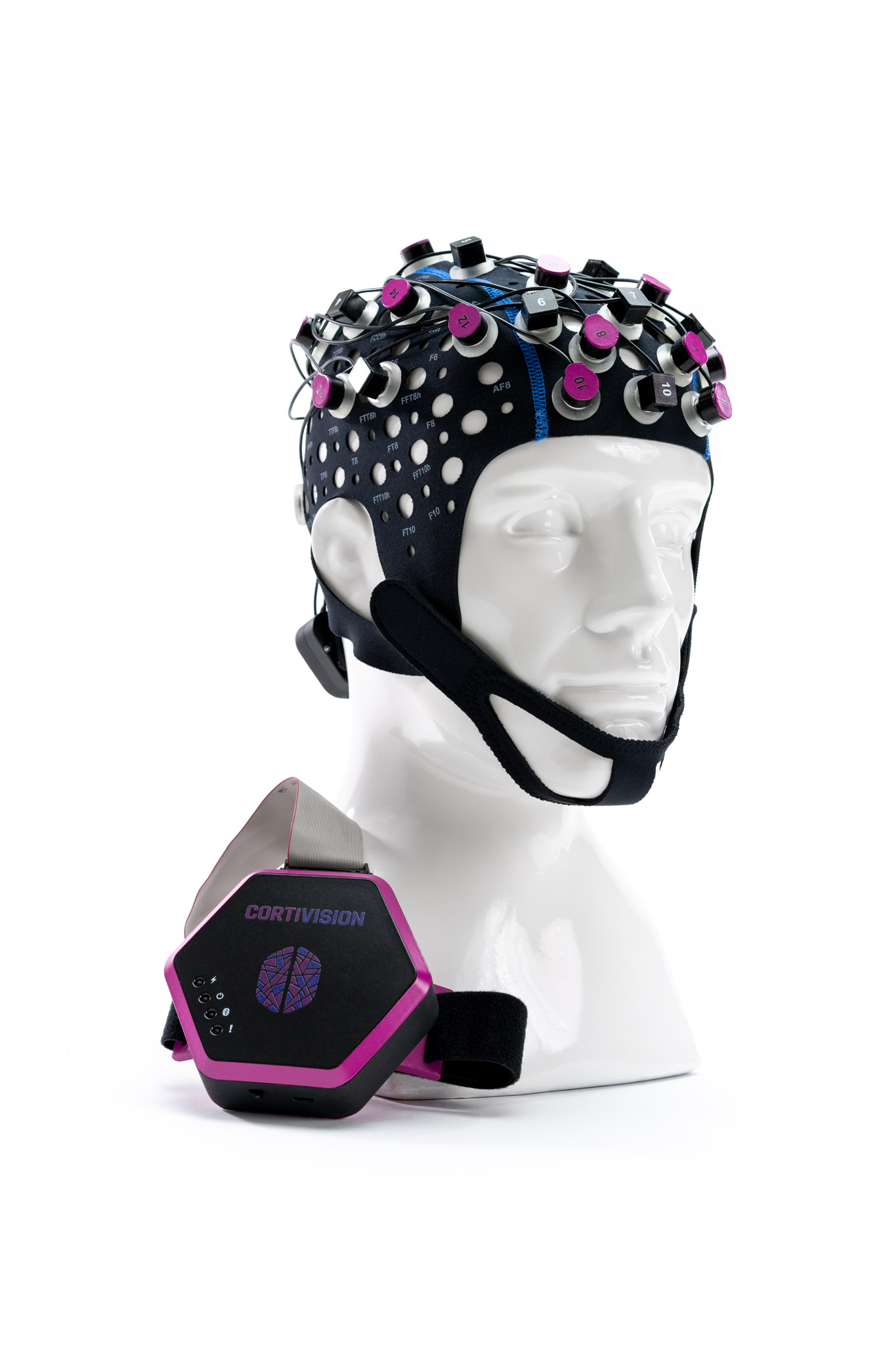
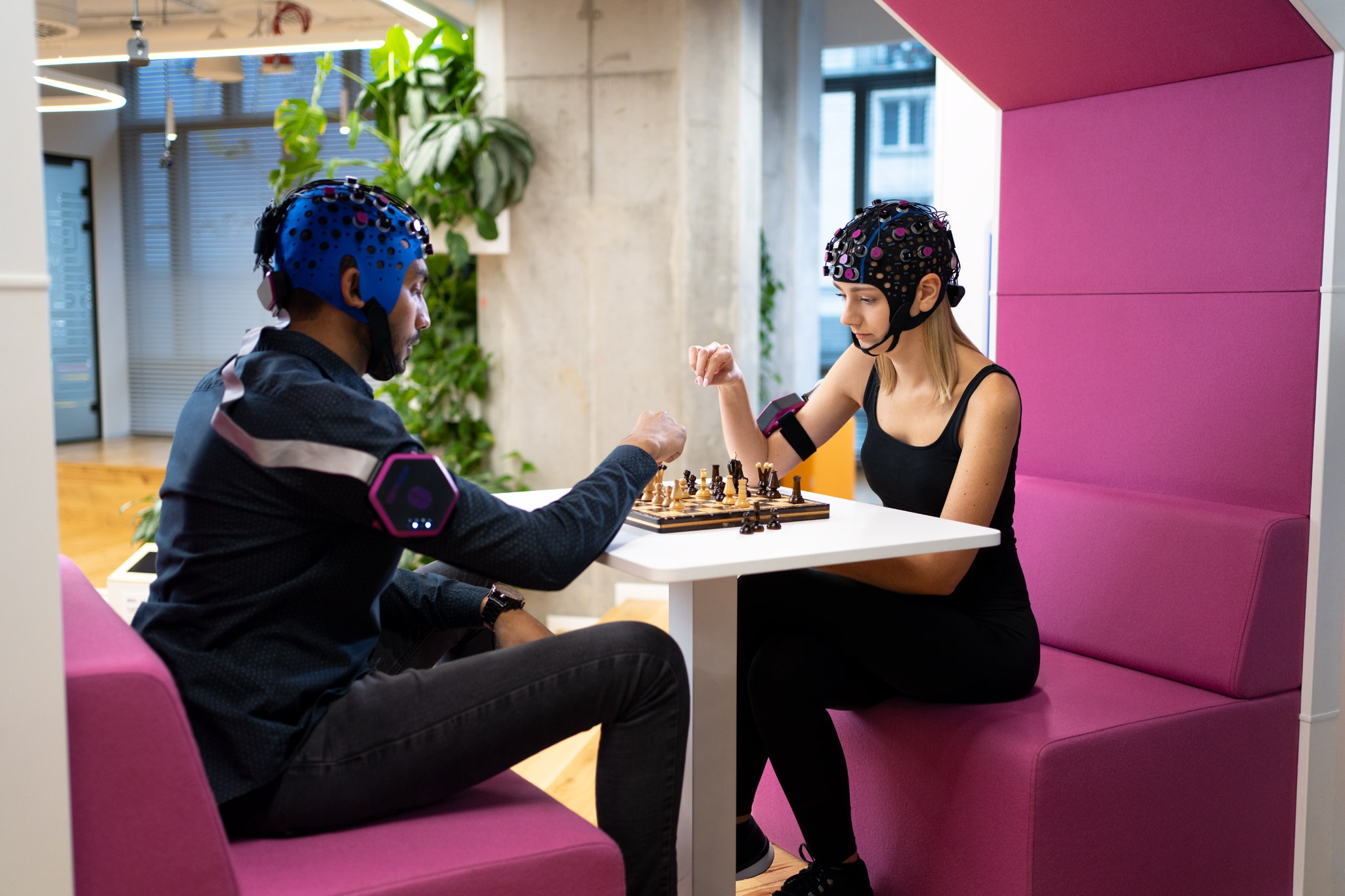
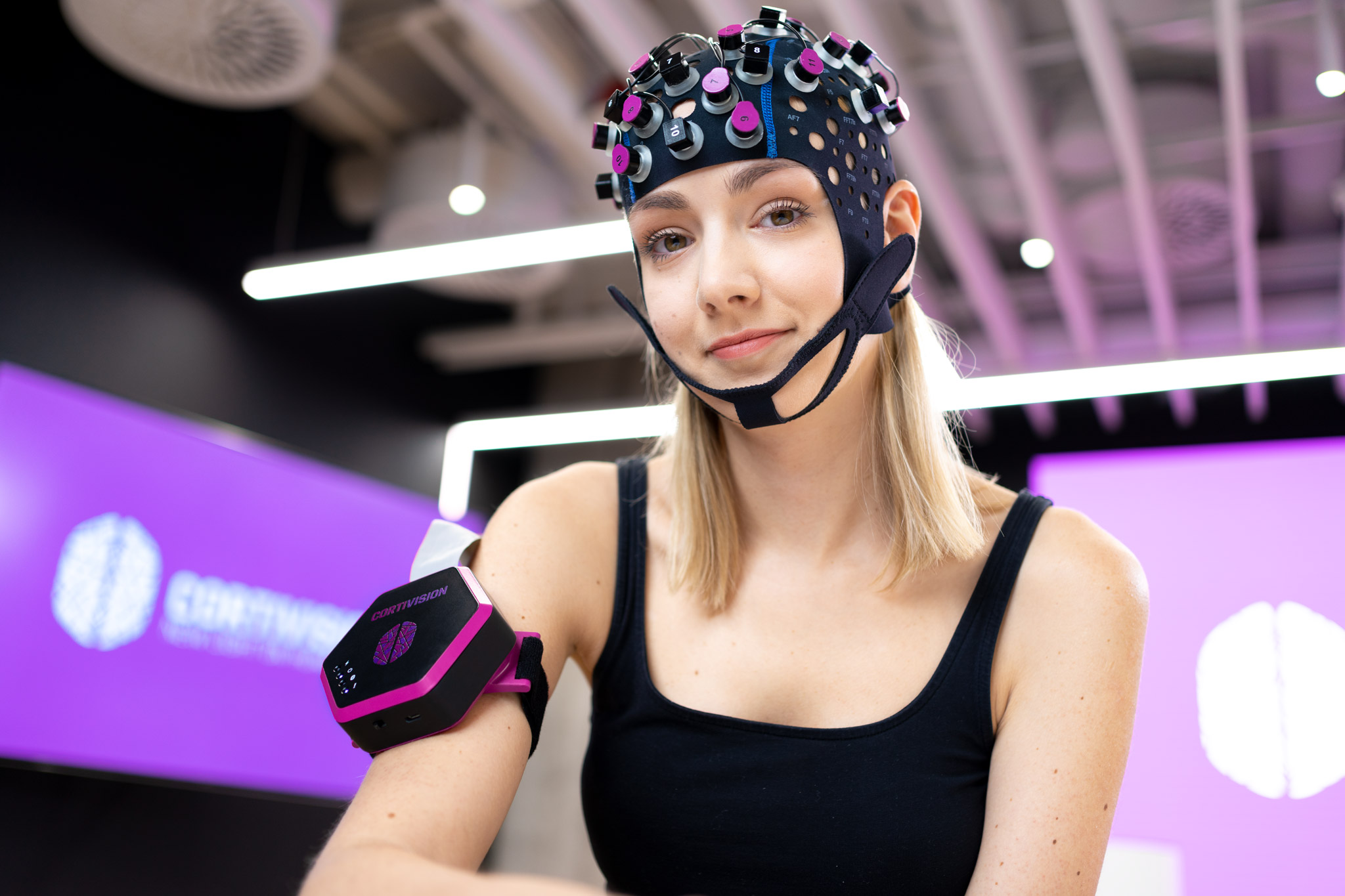
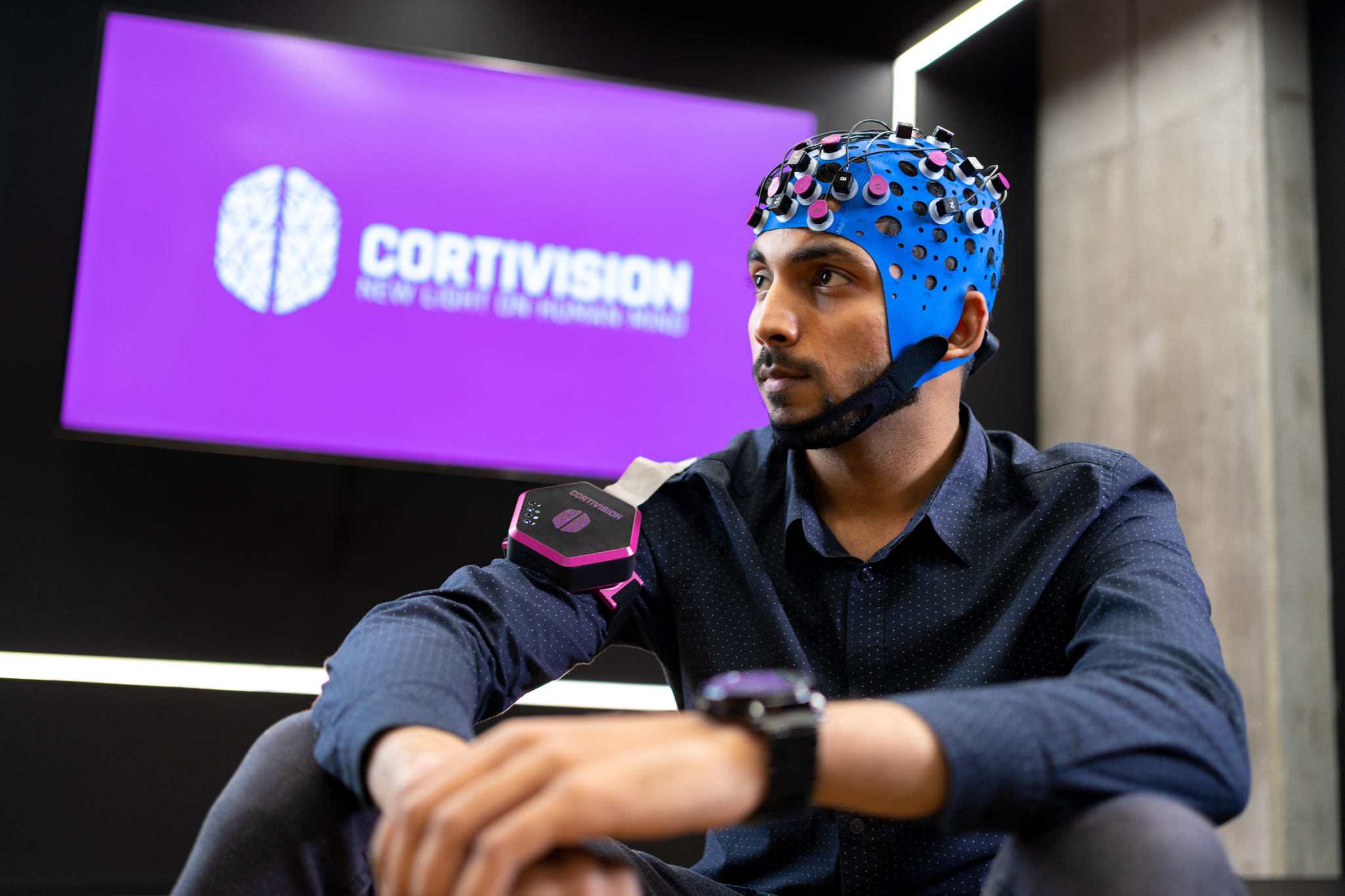
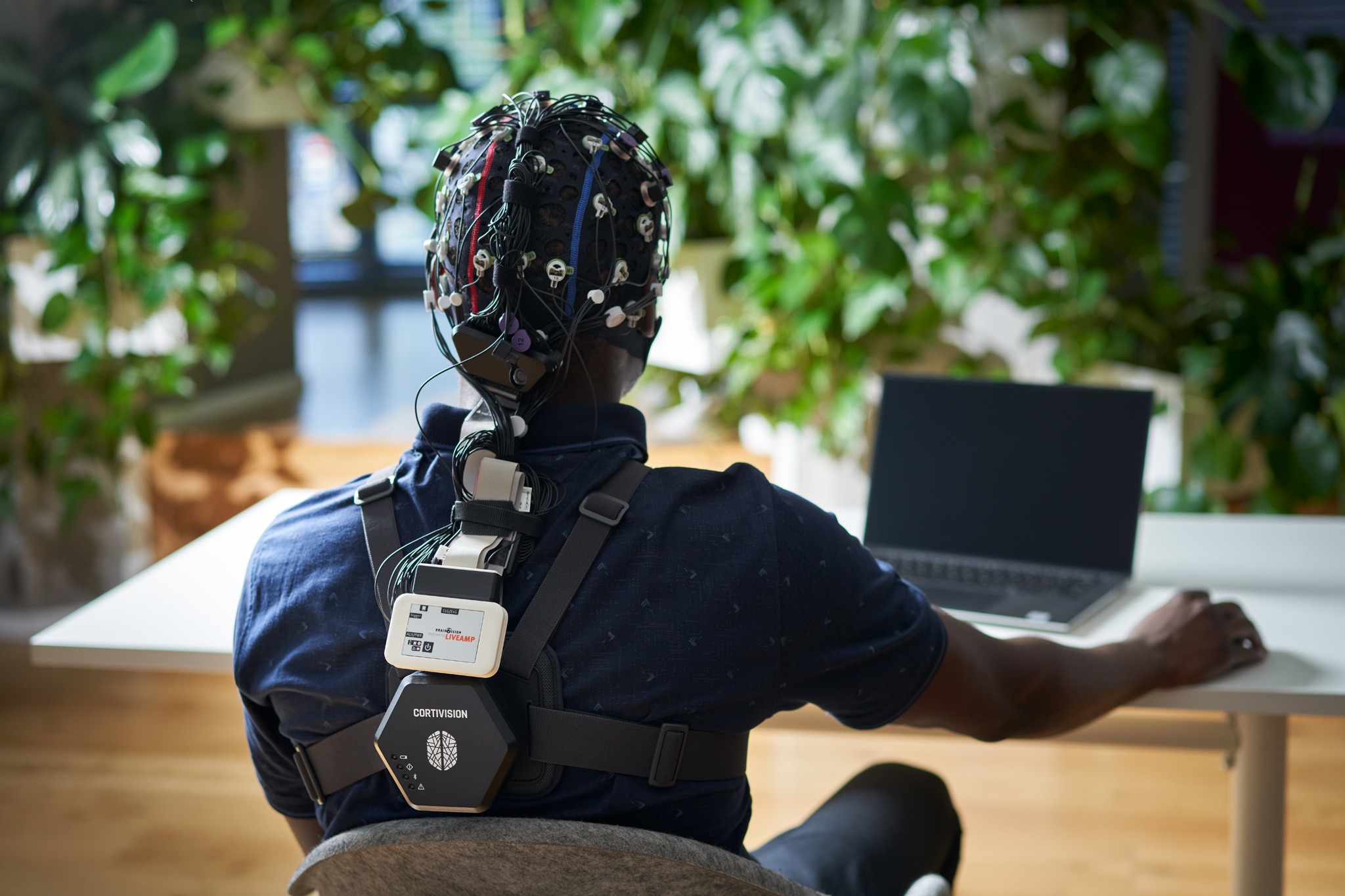
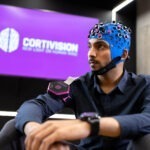
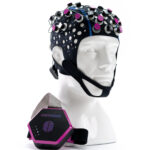
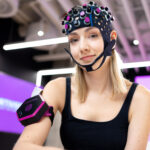
The PHOTON CAP fNIRS system weighs about half a pound (less than 230 grams) and can be worn effortlessly on a subject’s arm or chest while collecting data with its set of 16 sources and 10 detectors. Its ultra-compact design was a key factor in its selection for the Axiom-2 mission to the ISS and in Spring of 2023 it became the first fNIRS device used in space!

With Brain Vision’s experience with fNIRS as well as integrating it with EEG, we are excited to help more researchers apply Cortivision’s solutions in their studies!

Learn more about Cortivision here.
Frequently Asked Questions

Light intensity is heavily attenuated in tissue and falls off exponentially from the illumination point. The maximum achievable probing depth of NIRS is limited by the illumination strength – determined by the thermal damaging threshold – and the detection sensitivity. Imaging depth strongly depends on the tissue type and the application. Typical achievable transmission limits of NIRS are about 12 cm for breast tissue, and 6 cm on the arm or leg. For brain imaging, the probing depth of NIRS is about 3 cm.

Diffuse optical tomography is a low-resolution technique owing to the physics of light propagation in scattering media. Depending on the composition and size of the target tissue, the resolution is on the order of 5-10 mm.

The temporal resolution of an fNIRS device depends on its hardware as well as how its individual channels operate with respect to one another. Through time-multiplexing of the source firing, some systems can achieve anywhere between 3-25Hz depending on the optode montage. For a particular application, scan speed can be traded off against the desired coverage area (field-of-view) or source density (image resolution).

  • Language, Cognition
  • Learning, Memory
  • Sensory, Motor, Visual
  • Brain-Computer Interface (BCI) Neurofeedback
  • Acute Care, Ischemia
  • Autism
  • Animal Imaging: Rats
  • Animal Imaging: Monkeys
  • Child studies
  • Traumatic Brain Injury (TBI) Studies
  • Multimodal studies NIRS used simultaneously with EEG, TMS, eye-tracking, tDCS, and other modalities.
  • Behavioral studies
  • Motorcontrol & movement related studies
  • Sports performance studies

Related Products

A black plastic EEG headset (the X.on) floats in the picture. It has seven electrode positions with white sponges for recording EEG data. As a wireless device it can be used in non-traditional recording locations.
The X.on is a mobile EEG platform that can be used with PEER to collect ERP data in places and populations you never would have imagined. It delivers research quality data at a more affordable price point.

X.on + PEER

A woman and child sit side by side at a piano to play music while both simultaneously wear the wireless and lightweight Cortivision SPECTRUM fNIRS system to record data during a hyperscanning paradigm.
The Cortivision SPECTRUM is a lightweight, wearable, wireless fNIRS platform expandable from 12 sources/8 detectors to up to 48 sources/32 detectors for whole head and DOT imaging.

Cortivision SPECTRUM

GrafiCap Dinosaurs design (G113, by Ohmz) is pictured on a mannequin. The cap has 32 green actiCAP snap holders embedded in the fabric and a fun dinosaur pattern can be seen between the holders for fun EEG recordings.
Make EEG recordings fun for your younger participants by using caps with playful printed patterns!

GrafiCap

CortiPrism provides a robust GUI for analyzing fNIRS data from Cortivision devices in single subject and group level analyses.

Cortivision CortiPrism

View Other Application Fields

Website Search

Schedule a call with our Consultants​

Please select your area to schedule an introductory call with one of our Scientific Consultants.

script here