BIP2AUX Adapter

Bipolar-to-auxiliary adapter for V-Amp and actiCHamp amplifiers

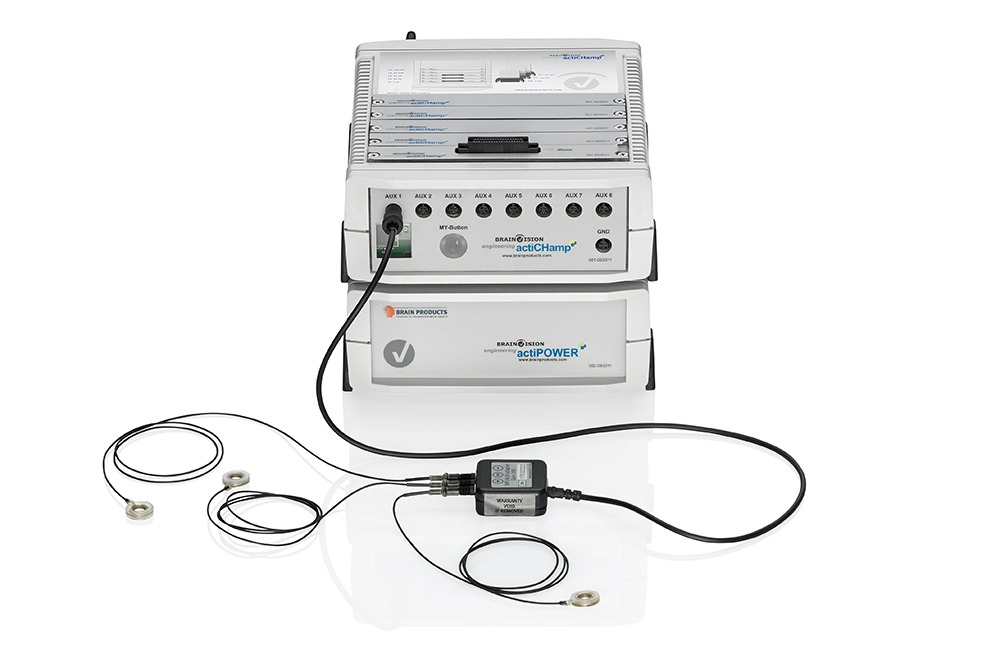
The BIP2AUX Adapter is a tiny, analogue differential DC amplifier that amplifies the incoming signal in order to make it measurable and relays it through the auxiliary input ports of the V-Amp and the actiCHamp. The adapter consequently turns these two amplifiers into even more versatile research tools by making them able to also record bioelectrical signals with a bipolar montage (a common way of acquiring EOG, ECG or EMG signals).

Although actiCHamp and V-Amp have inputs for auxiliary sensors, these inputs are intended to accept signals that typically lie in the volt range, whereas the amplitude of bipolar bioelectrical signals typically has values of just a few mV. The mismatch between the magnitude of the data and the operating range of the input channels prevented signals of sufficiently good quality from being acquired so far.
Related Products

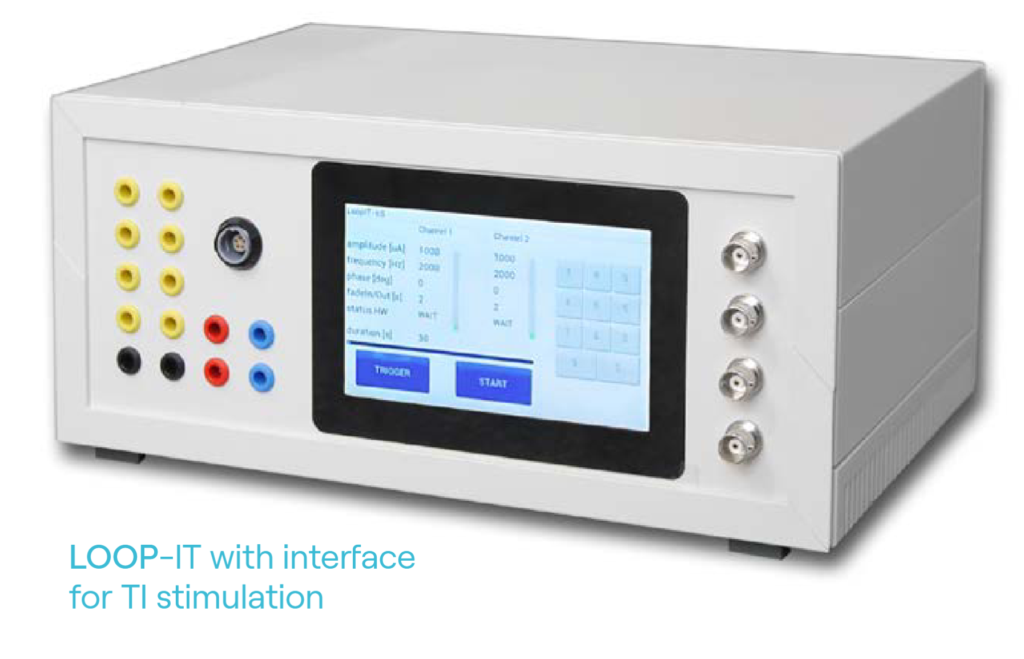
The LOOP-IT's front panel is depicted with its touchscreen interface, 8x EEG inputs, 2x tES outputs, 4x BNC outputs, and a special port.
The neuroConn LOOP-IT is an all-in-one solution for closed loop EEG-tES, TMS-EEG, and EEG-tFUS.

neuroConn LOOP-IT

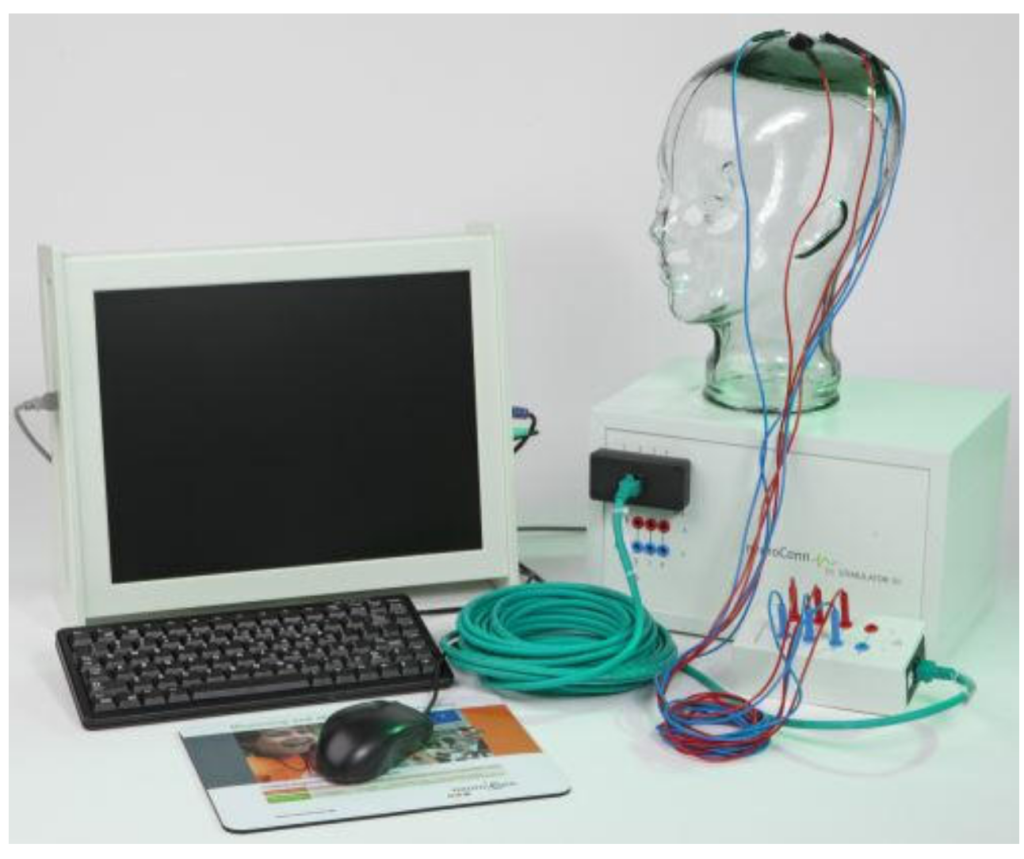
neuroConn DCMC is pictured with its control panel PC, keyboard, and mouse, along with 4x stimulation channels connected to a glass head via rubber electrodes.
An expandalbe multi-channel transcranial electrical stimulation (HD-tES) platform.

neuroConn DC-STIMULATOR MC

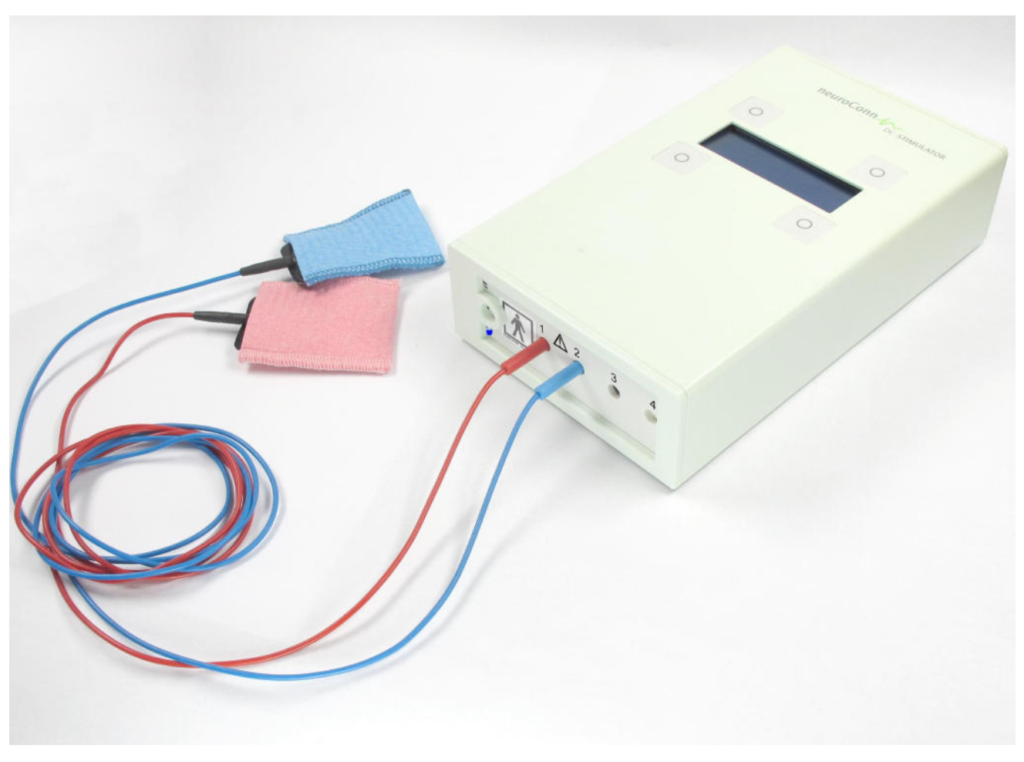
neuroConn DC-STIMULATOR PLUS is depicted laying on a table with a pair of rubber/sponge electrodes connected.
A capable and powerful one-channel transcranial electrical stimulation (tES) tool.

neuroConn DC-STIMULATOR PLUS

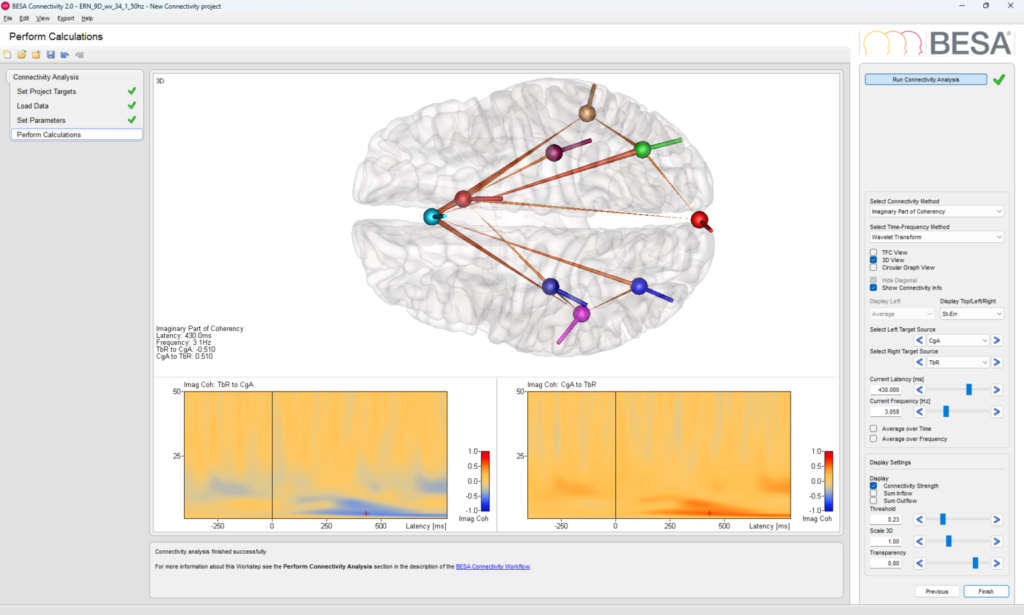
The BESA Connectivity software interface is a workflow-based GUI that walks you through the connectivity analysis of your choosing. Here you see the results of a Coherence analysis between multiple regional sources (source space, frequency anlaysis).
BESA Connectivity is a stand-alone module that extends BESA Research with streamlined, user-guided workflows for time–frequency and connectivity analysis of EEG and MEG data (in both scalp and source space). With multiple time–frequency and connectivity analysis methods supported, you can run batch analyses across subjects and easily visualize results using a variety of 2D and 3D renderings. The output is also ready for direct import into BESA Statistics.

BESA Connectivity 2.0

View Other Application Fields

Website Search

Schedule a call with our Consultants​

Please select your area to schedule an introductory call with one of our Scientific Consultants.

script here